
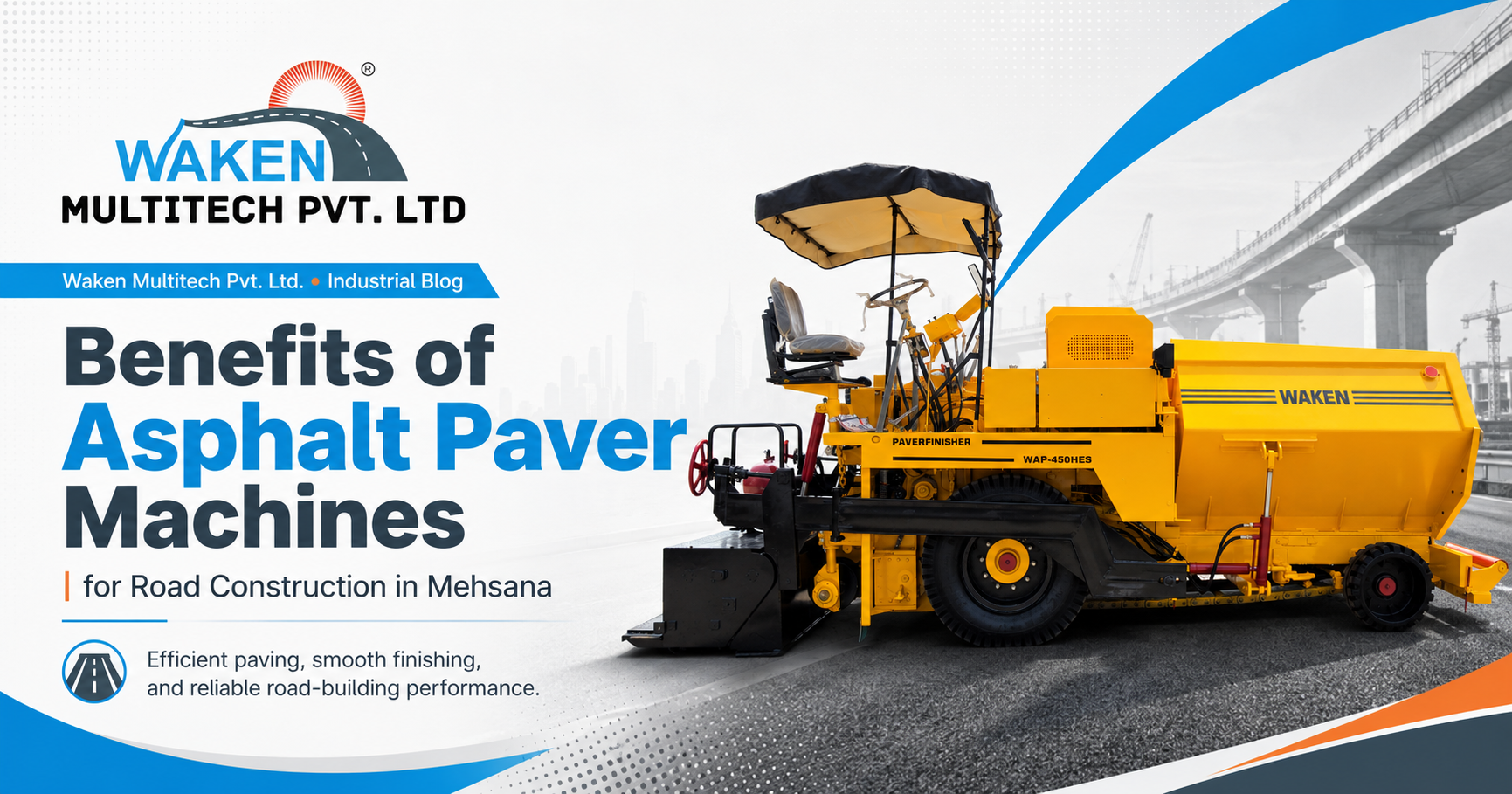
Benefits of Asphalt Paver Machines
Discover the key benefits of asphalt paver machines for efficient road construction in Mehsana. Learn how Waken Multitech delivers quality and performance.
What is an Asphalt Paver Machine? — Overview
An asphalt paver machine, also known as an asphalt finisher, is a piece of heavy construction equipment used to lay asphalt for road construction and repair. It works by receiving asphalt mix from a dump truck, storing it temporarily in a hopper, and then distributing it evenly across the prepared roadbed using a screed. The screed, often heated, levels and compacts the asphalt to a predetermined thickness and width, creating a smooth surface ready for further compaction by rollers.
Key Features and Technical Specifications
Modern asphalt paver machines are engineered with advanced features to enhance performance and operational efficiency. Key specifications and features to consider include:
- Variable Paving Width: Allows for adjustment to suit different road lane requirements and project scopes.
- Adjustable Paving Depth: Enables precise control over the asphalt layer thickness for optimal road performance.
- High-Capacity Hopper: Ensures continuous material flow, reducing downtime and increasing paving speed.
- Advanced Control Systems: May include electronic sensors for automatic grade and slope control, ensuring consistent surface quality.
- Efficient Conveyor System: Delivers asphalt mix from the hopper to the screed with minimal segregation.
- Heated Screed: Crucial for achieving a smooth, uniform finish by preventing asphalt from sticking and ensuring proper compaction.
- Robust Chassis and Drive System: Provides stability and power for operation on various terrains and gradients.
- Ergonomic Operator Station: Designed for comfort and ease of operation, improving operator focus and productivity.
Industrial Applications and Use Cases
Asphalt paver machines are versatile tools with a wide range of applications in civil engineering and construction:
- New Highway Construction: Laying asphalt layers for national and state highways.
- Road Widening Projects: Extending existing road surfaces to accommodate increased traffic.
- Urban Road Paving: Constructing and resurfacing city streets and arterial roads.
- Airport Runway and Taxiway Construction: Requiring high precision and durability for heavy aircraft loads.
- Industrial Estate Road Development: Building robust internal road networks within manufacturing zones.
- Rural Road Improvement: Enhancing connectivity to remote areas with durable asphalt surfaces.
- Parking Lot and Driveway Construction: Providing smooth and durable surfaces for commercial and private use.
- Resurfacing and Rehabilitation: Applying new asphalt layers over existing worn-out surfaces to extend road life.
How to Choose the Right Asphalt Paver Machine
Selecting the appropriate asphalt paver machine is crucial for project success. Consider these factors:
- Project Scale and Type: Assess the typical size and nature of your projects (highway, urban, rural).
- Required Paving Width and Depth: Ensure the machine can meet the specified dimensions for your asphalt layers.
- Material Handling Capacity: Consider the hopper size and conveyor system's ability to maintain a consistent flow from your typical truckloads.
- Technology and Control Systems: Evaluate whether basic mechanical controls, sensor-based systems, or advanced automated controls are necessary for your precision requirements.
- Mobility and Maneuverability: Consider the terrain and site conditions where the paver will operate.
- Brand Reputation and Support: Research the manufacturer's track record for reliability, durability, and after-sales service.
- Budget and Total Cost of Ownership: Factor in not just the initial purchase price but also operational costs, maintenance, and potential resale value.
- Operator Skill and Training: Ensure your team is adequately trained to operate the chosen model effectively and safely.
Quality Standards and Compliance
Ensuring that an asphalt paver machine meets stringent quality standards and compliance is vital for long-term performance and safety. Reputable manufacturers adhere to international and national standards such as ISO certifications for quality management systems. In India, compliance with Bureau of Indian Standards (BIS) specifications for construction equipment is often a key indicator of quality. Buyers should verify that the machine's design and manufacturing processes align with these standards, ensuring durability, operational safety, and environmental compliance.
Why Waken Multitech's Experience and Capability Matters
Waken Multitech Pvt. Ltd. brings over 15 years of dedicated experience in manufacturing high-quality road construction equipment. Our foundation, built by industry veterans Mr. Rakesh Patel and Mr. Sandip Patel, is rooted in a deep understanding of the technical demands of modern infrastructure projects. Located strategically on the Mehsana–Vijapur Highway, our facility is equipped with advanced manufacturing capabilities and a skilled workforce committed to precision engineering.
We focus on delivering machines that offer exceptional durability, consistent performance, and operational efficiency. Our commitment extends beyond manufacturing; we provide customized solutions tailored to specific project needs and offer responsive after-sales support. This holistic approach ensures that our clients in Mehsana and beyond receive reliable equipment backed by genuine expertise, contributing to the successful completion of their road construction endeavors.
Installation, Maintenance, and Care Tips
Proper installation, regular maintenance, and diligent care are essential for maximizing the lifespan and performance of your asphalt paver machine.
- Installation: Ensure the machine is set up on a level surface and all operational checks are completed by trained personnel before the first use. Familiarize yourself with the operator's manual.
- Daily Checks: Before each shift, inspect fluid levels (hydraulic, engine oil, coolant), tire pressure, and the condition of wear parts like the screed plates and conveyor chains.
- Cleaning: Thoroughly clean the machine after each use, especially the hopper, conveyors, and screed, to prevent asphalt buildup. Use appropriate cleaning agents.
- Lubrication: Follow the manufacturer's recommended lubrication schedule for all moving parts to reduce friction and wear.
- Screed Maintenance: Keep the screed clean and ensure heating elements are functioning correctly. Check for any damage or wear on the screed plates and address them promptly.
- Filter Replacement: Regularly replace air, fuel, and hydraulic filters as per the maintenance schedule to ensure optimal engine and hydraulic system performance.
- Operator Training: Ensure operators are well-trained on the machine's functions, safety features, and best operating practices.
Frequently Asked Questions
The primary function of an asphalt paver machine is to evenly distribute and lay asphalt concrete mixture onto a prepared roadbed. It ensures a uniform layer thickness and width, creating a smooth surface that is ready for compaction by rollers, forming the foundation of durable roads.
Smoothness is achieved through the machine's screed, which levels the asphalt. Advanced models use sensors to maintain consistent grade and slope, while the heated screed prevents sticking and aids in initial compaction, contributing to a superior finish.
Key components include the hopper for receiving asphalt, conveyors to transport it to the rear, a distribution system, and the screed, which is responsible for leveling and initial compaction. The chassis and drive system provide mobility and power.
Hydrostatic pavers offer more precise control over speed and paving width, allowing for smoother operation and better adaptability to varying conditions. Mechanical pavers are often simpler and more robust for heavy-duty, consistent applications.
Regular maintenance includes daily checks of fluid levels, cleaning of the hopper and screed, lubrication of moving parts, and timely replacement of filters and wear components like screed plates and conveyor parts.
A reliable manufacturer ensures the machine is built to high-quality standards, offering durability, consistent performance, and safety. They also provide crucial after-sales support, spare parts availability, and technical expertise, which are vital for minimizing downtime and maximizing operational efficiency.
Conclusion
For road construction projects in Mehsana, the benefits of utilizing asphalt paver machines are undeniable. They deliver enhanced efficiency, superior surface quality, and greater operational control, all of which are critical for building durable and reliable infrastructure. When selecting a machine, it's vital to consider project-specific requirements, technical specifications, and the manufacturer's commitment to quality and support. Partnering with an experienced and capable manufacturer like Waken Multitech ensures access to robust equipment and the expertise needed to achieve outstanding results in your road construction endeavors.
Get In Touch
Waken Multitech Pvt. Ltd.