
Comprehensive Guide to Asphalt Paver Operation
Introduction to Efficient Asphalt Paver Operation
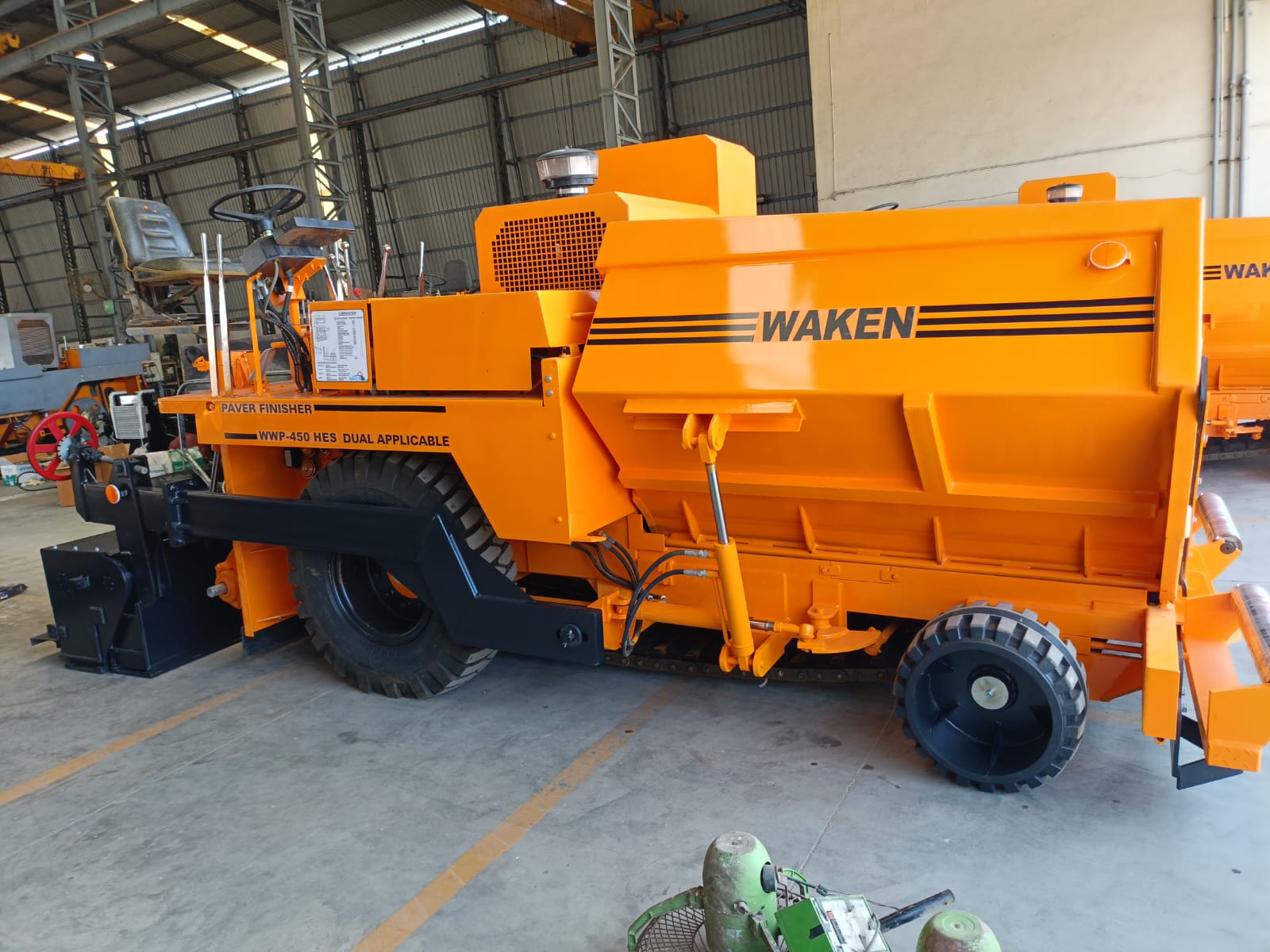
Successful road construction hinges on efficient and precise asphalt paver operation. The paver is the centerpiece of the paving train, responsible for taking the hot-mix asphalt (HMA) from the truck, spreading it evenly, and providing initial compaction to the correct thickness and slope. Mastering its operation requires understanding the interaction between the tractor unit (which propels the machine and moves the material) and the screed unit (which forms and finishes the mat). Waken Multitech designs pavers that streamline this critical process, ensuring reliability and high-quality output on every project.
Key Stages in Paver Operation
Effective paver operation is divided into several synchronized steps. The goal is always to maintain a constant, consistent forward motion and material flow. Deviations in speed or material head can lead to irregularities in the mat's density and finish. Experienced operators focus on smooth, continuous paving, utilizing the augers and conveyors to maintain an optimal volume of mix directly in front of the screed. Precision grade control, often assisted by automated sensors, ensures that the laid material matches the required specifications exactly.
Critical Paver Operational Areas
- Hopper and Truck Management: Ensures smooth, non-contact material transfer from the dump truck to the paver without jolting the machine.
- Conveyor and Auger Speed Control: Essential for regulating the material flow rate to maintain a consistent 'head of material' in front of the screed.
- Screed Setup and Control: Involves setting the angle of attack, pre-strike-off, and temperature to achieve the specified mat thickness and density.
- Steering and Tracking: Maintaining a perfectly straight line and correct overlap or joint matching with the adjacent lane.
- Paving Speed Consistency: Selecting and maintaining the optimal forward speed based on mix delivery rate, laydown thickness, and compaction train capacity.
Best Practices for Asphalt Paver Operation
- Pre-Operation Inspection: Checking all fluid levels, heater systems, screed plate condition, and cleaning sensors before starting.
- Consistent Material Head: Ensuring the asphalt mix level remains steady, typically at the centerline of the main auger, to prevent density variation.
- Non-Stop Paving: Minimizing stops and starts, which are the main causes of bumps and joints in the finished mat.
- Temperature Monitoring: Paving must occur within a specific temperature window to allow for effective compaction behind the paver.
- Coordination with Compaction: The paver speed must be matched to the rolling train's capacity to achieve the specified density before the mix cools too much.
Operational Excellence for Different Paving Tasks
- National Highway Construction: Focus on long, straight runs with high-capacity pavers, demanding strict control over grade and longitudinal smoothness.
- Urban Road Repair: Requires wheeled pavers for better maneuverability, frequent starts/stops, and careful joint creation around manholes and curbs.
- Shoulder Paving: Often uses special attachments and requires precise feathering of the edge and maintaining the correct runoff slope.
- Thin Lift Overlays: Requires extremely precise screed control and lower paving speeds to ensure the thin mat achieves proper density without tearing.
Operational Benefits of Waken Multitech Pavers
- Operator-Centric Controls: Ergonomically designed control stations reduce operator fatigue and simplify complex sensor adjustments.
- Robust Hydrostatic Drive: Provides smooth, consistent power delivery, which is crucial for maintaining constant paving speed without surges or hesitations.
- Quick Screed Heating: Efficient heating elements allow the screed to reach the optimal paving temperature quickly, minimizing downtime.
- Simplified Maintenance Access: Design features that make routine checks and servicing easier, ensuring maximum uptime during demanding operational schedules.
Troubleshooting Common Operational Issues
- Address Longitudinal Streaks: Often caused by incorrect auger height or material segregation; check for consistent material head across the screed width.
- Correcting Transverse Bumps: Typically a result of stopping or starting the paver; practice smooth material transfer from the truck and non-stop paving.
- Solving Mat Tears (Ripping): Usually due to screed temperature too low, paving speed too high, or a cold mix; adjust heater settings and pace accordingly.
- Handling Material Segregation: Minimize dropping mix from great heights into the hopper and ensure proper truck unloading to maintain mix uniformity.
FAQs – Asphalt Paver Operation
Contact Details
Talk to our specialists today for tailored solutions and fast assistance.