
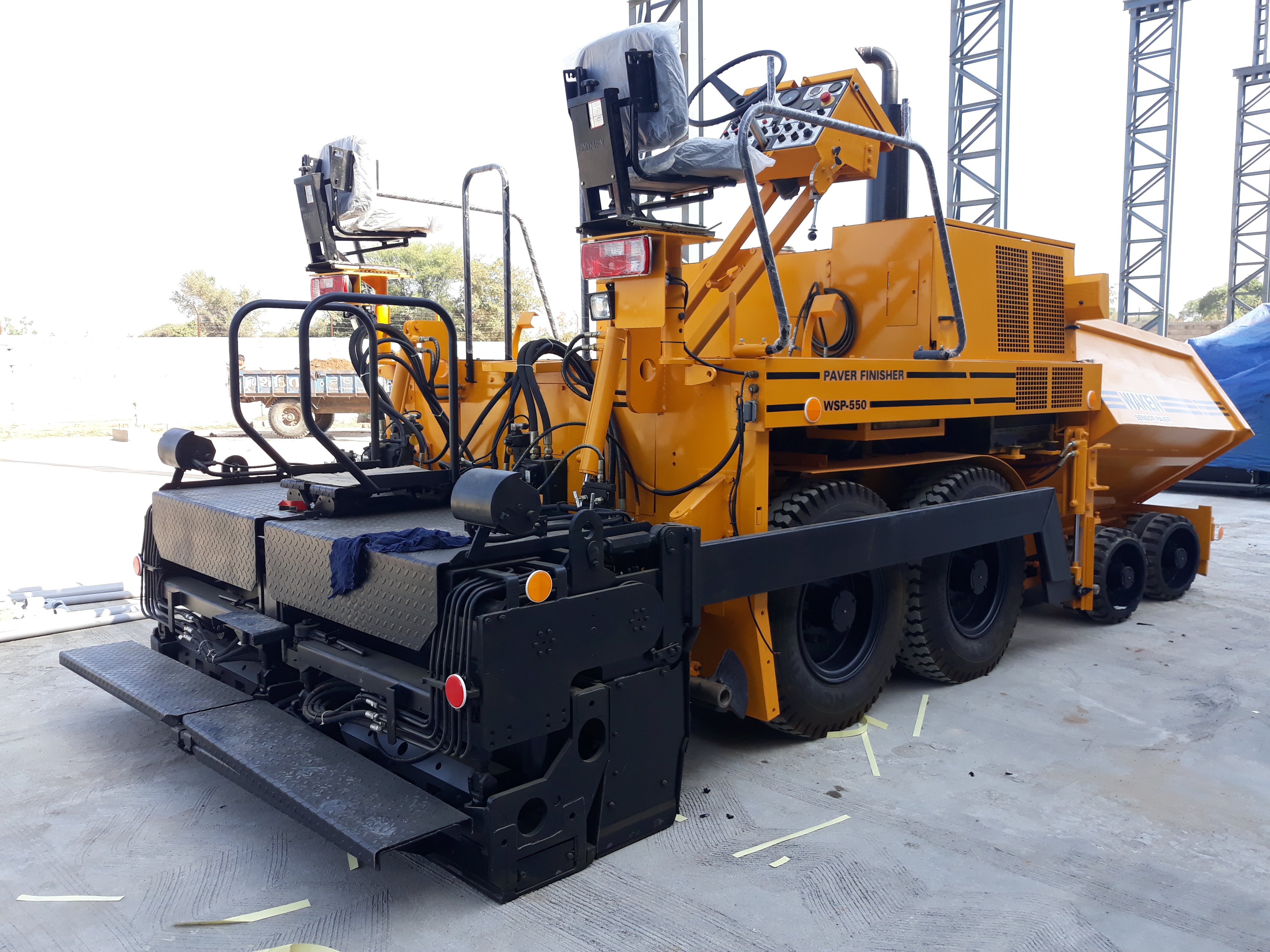
Introduction to Concrete Road Paver
A Concrete Road Paver, particularly the slipform type, is a specialized machine essential for constructing long-lasting, rigid pavements. In India, these pavers are at the forefront of building national expressways, highways, and airport runways that require immense strength and durability. Unlike asphalt pavers, they extrude a continuous slab of concrete, shaping and finishing it in a single pass. This technology ensures superior surface smoothness and a service life of decades, making it a cornerstone for developing robust infrastructure. High-quality road construction equipment is key to achieving these standards.
Working Principle and Process Flow of Concrete Road Paver
The slipform paving process is highly automated. Freshly mixed concrete is deposited in front of the paver. The machine moves forward on crawler tracks, and the concrete is fed into a paving mould. Inside, powerful hydraulic vibrators consolidate the concrete to remove air pockets and ensure density. The mould, or 'form', extrudes the concrete into the precise shape and dimensions of the pavement slab. As the paver advances, finishing beams and a super smoother at the rear provide the final texture, creating a smooth, continuous surface. This system represents the pinnacle of concrete paving technology.
Types of Concrete Road Paver
- Slipform Pavers: For high-volume projects like highways, extruding concrete continuously without fixed side forms for maximum speed and efficiency.
- Fixed-Form Pavers: These travel on rails or forms set up along the pavement edges, suitable for smaller or complex jobs.
- Curb and Gutter Machines: Specialized pavers designed to simultaneously form and finish concrete curbs, gutters, and barriers along road edges.
- Canal Lining Pavers: Engineered specifically for paving the beds and slopes of irrigation canals with concrete for water conservation and durability.
- Texture Curing Machines: Follows the main paver to apply a textured finish for skid resistance and spray a curing compound.
Key Features and Specifications of Concrete Road Paver
- Paving widths are adjustable, often ranging from 3.0 meters up to 16 meters.
- Advanced electronic sensors provide precise automatic control over grade, slope, and steering accuracy.
- High-frequency hydraulic vibrators ensure uniform compaction and density throughout the concrete slab.
- Equipped with powerful diesel engines to handle large volumes of concrete with consistent performance.
- A robust, modular frame design allows for easy width adjustments and transportation between sites.
Applications of Concrete Road Paver
- National Expressways & Highways: Ideal for constructing multi-lane concrete highways that form the backbone of India's transport network, designed to handle extreme traffic loads and provide a long, maintenance-free service life.
- Airport Infrastructure: Used for paving runways, taxiways, and aprons where extreme flatness tolerances and high load-bearing capacity are non-negotiable for aircraft safety and operational efficiency under all weather conditions.
- Industrial Pavements & Container Yards: Perfect for creating heavy-duty concrete surfaces in ports, logistics parks, and industrial zones that must withstand the immense weight of containers, forklifts, and heavy machinery without deformation.
- Canal and Reservoir Lining: Specialized models are used to line irrigation canals and reservoirs with concrete, preventing water seepage, improving flow efficiency, and ensuring long-term structural integrity for water management projects.
Benefits of Using Concrete Road Paver
- Unmatched Durability & Longevity: Concrete roads built with pavers last 30-40 years with minimal maintenance, offering a superior lifecycle cost compared to flexible pavements and providing a long-term return on investment.
- Superior Ride Quality: Slipform technology produces an exceptionally smooth and even surface, enhancing driver comfort and safety while reducing vehicle wear and tear, contributing to better fuel efficiency for traffic.
- High Construction Speed: These machines can pave hundreds of meters of multi-lane road in a single day, significantly accelerating project timelines for critical infrastructure projects and reducing disruption to the public.
- Reduced Labour & Enhanced Safety: The automated process minimizes the need for manual labour, reducing project costs and improving worksite safety by limiting workers' exposure to heavy machinery and wet concrete.
Top Manufacturers and Suppliers in India
India's concrete road paver market is dominated by global leaders known for their advanced slipform technology. While manufacturing is concentrated among a few key international brands, they have a strong presence in India through local subsidiaries and dealer networks. These suppliers offer comprehensive solutions, including state-of-the-art pavers equipped with sophisticated sensor controls for high-precision work. Buyers in India focus on factors like machine productivity, paving accuracy, fuel efficiency, and, most importantly, the availability of trained technicians and after-sales support to ensure maximum uptime on large-scale, time-sensitive infrastructure projects like national expressways and airports.
Maintenance and Safety Tips
- Thoroughly clean the paver, especially the mould and vibrators, immediately after each paving session.
- Regularly calibrate steering and grade sensors to maintain the highest level of paving accuracy.
- Inspect hydraulic systems and vibrator functionality daily to ensure proper concrete consolidation and performance.
- Ensure all personnel are clear of the machine's path and moving parts during operation.
- Keep dowel bar inserters and tie bar inserters clean and correctly aligned for structural integrity.
FAQs – Concrete Road Paver
Contact Details
Talk to our specialists today for tailored solutions and fast assistance.