
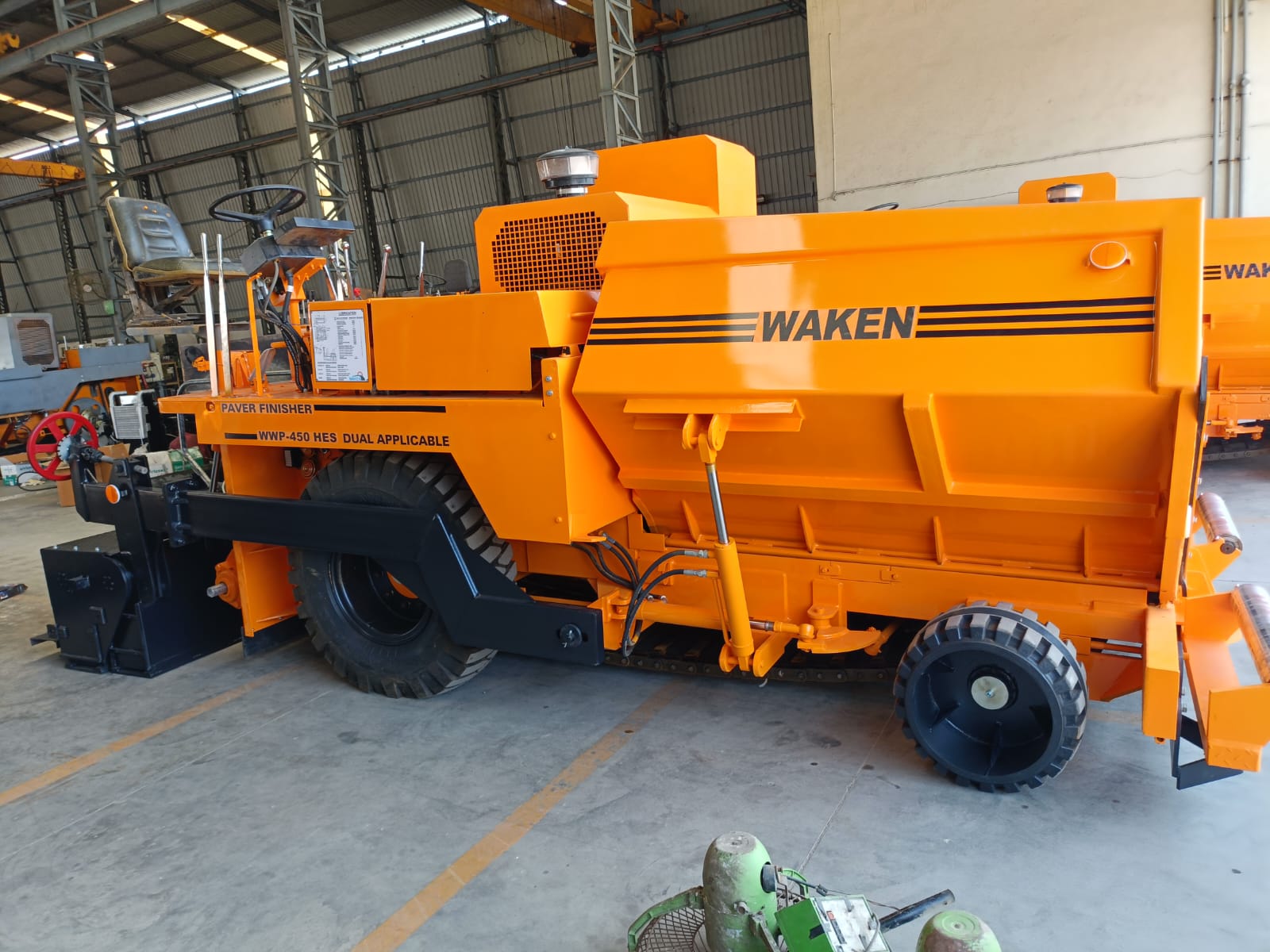
Detailed Technical Wet Mix Paver
Understanding Wet Mix Paver Specifications
Selecting the right road construction equipment starts with a deep dive into the Wet Mix Paver Specifications. These technical details dictate the machine's capacity, maneuverability, and overall efficiency when dealing with granular materials like Wet Mix Macadam (WMM). Key specs include engine horsepower, maximum paving width, layer thickness capability, and hopper capacity. Waken Multitech designs its WMM finishers with superior specifications to handle high-volume, continuous paving for national and state highway projects, ensuring compliance with strict material density standards. A detailed understanding of these specifications allows contractors to match the paver precisely to the project requirements.
Critical Performance Parameters of WMM Finishers
The operational efficiency of a WMM paver is directly tied to its power train and material handling system. The hydrostatic drive system, a common feature in high-specification pavers, ensures a steady, continuous travel speed essential for a consistent, smooth surface finish with granular mix. Furthermore, the capacity and design of the conveyor and auger systems must be specified to prevent material segregation and blockage, which can compromise the quality of the paved base layer. Our technical Wet Mix Paver Specifications emphasize hydraulic power and robust mechanical components engineered for the abrasive nature of WMM.
Comparing WMM Paver Configuration Specifications
- Tracked Paver Specifications: Highlight increased tractive effort, necessary for moving high loads over soft or uneven base layers common in WMM work.
- Wheeled Paver Specifications: Focus on faster travel speed, greater maneuverability, and lower initial running gear maintenance costs for certain projects.
- Max Paving Width and Thickness: Specifications crucial for determining how efficiently the machine can cover wide multi-lane roads in fewer passes.
- Engine Power (kW/HP) and Cooling System: Essential specs ensuring the paver maintains performance under continuous heavy load and high ambient temperatures.
- Hopper Capacity and Feed Rate: Defines the material buffer and the sustained production capability, impacting project timelines.
Key Technical Specifications for Reliability
- High-Precision Electronic Grade Control: Specifies the system type (e.g., sonic ski) and the level of accuracy it maintains for the base course laydown.
- Hydrostatic Transmission System: Detailed specs on pump and motor capacity, ensuring reliable, smooth power for travel and material feed.
- Heavy-Duty Screed Design: Specifications related to screed weight and stiffness, which are critical for achieving initial compaction and flatness.
- Fuel and Hydraulic Tank Capacity: Details necessary for calculating operational uptime between refueling/maintenance stops on long-haul projects.
- Ground Pressure (for Tracked Models): Crucial specification for limiting damage to the subgrade, especially in areas with lower soil bearing capacity.
Specifications Critical for Specific Applications
- Primary Layer Base Course: Requires high-capacity and wide-width specs for efficient placement of thick WMM layers on new highway construction.
- Shoulder Construction: Needs compact, maneuverable specifications, often wheeled, to pave narrow, tight areas while maintaining consistent quality.
- Rural Road Development: Specs must balance paving width with overall machine footprint and easy transportability between sites.
- Industrial Yard and Port Paving: Demands specifications for precision steering and heavy-duty components due to confined spaces and constant, high-tonnage use.
Why Specifications Matter for Project Success
- Accurate Cost Estimation: Precise specs help calculate material consumption and hourly fuel usage, leading to better project cost control.
- Guaranteed Project Compliance: Matching the paver's max width and thickness specs to the contract requirements ensures regulatory fulfillment from the start.
- Minimized Downtime: Specs detailing robust cooling systems and heavy-duty components indicate higher reliability and reduced repair frequency.
- Optimal Mat Quality: Specifications related to material flow control and screed stability are essential for laying a uniform and segregated-free WMM layer.
Consulting Waken Multitech for Technical Data
We believe in transparency regarding our **Wet Mix Paver Specifications**. Waken Multitech provides complete technical dossiers for our entire range, detailing engine outputs, hydraulic flow rates, operating weights, and dimensional drawings. Our experts are available to walk you through the specifics, helping you understand how our pavers' superior design specifications translate into faster, more reliable project completion. Always insist on verified, manufacturer-provided specifications to prevent project delays caused by mismatched or underpowered machinery.
Best Practices for Maintaining WMM Paver Specs
- Regularly check the hydrostatic fluid levels and quality, ensuring they meet the manufacturer's specified viscosity and cleanliness standards.
- Periodically measure the wear on the auger and conveyor components against the original specifications to maintain optimal material flow rates.
- Strictly follow the specified engine maintenance schedule (oil changes, filter replacements) to keep horsepower and fuel efficiency within tolerance.
- Ensure the screed's mechanical systems are adjusted according to the recommended factory tension and alignment settings for width and slope.
- Check the track pads or tire inflation pressure against the specified working range to maintain ground contact and traction performance.
FAQs – Wet Mix Paver Specifications
Contact Details
Talk to our specialists today for tailored solutions and fast assistance.