
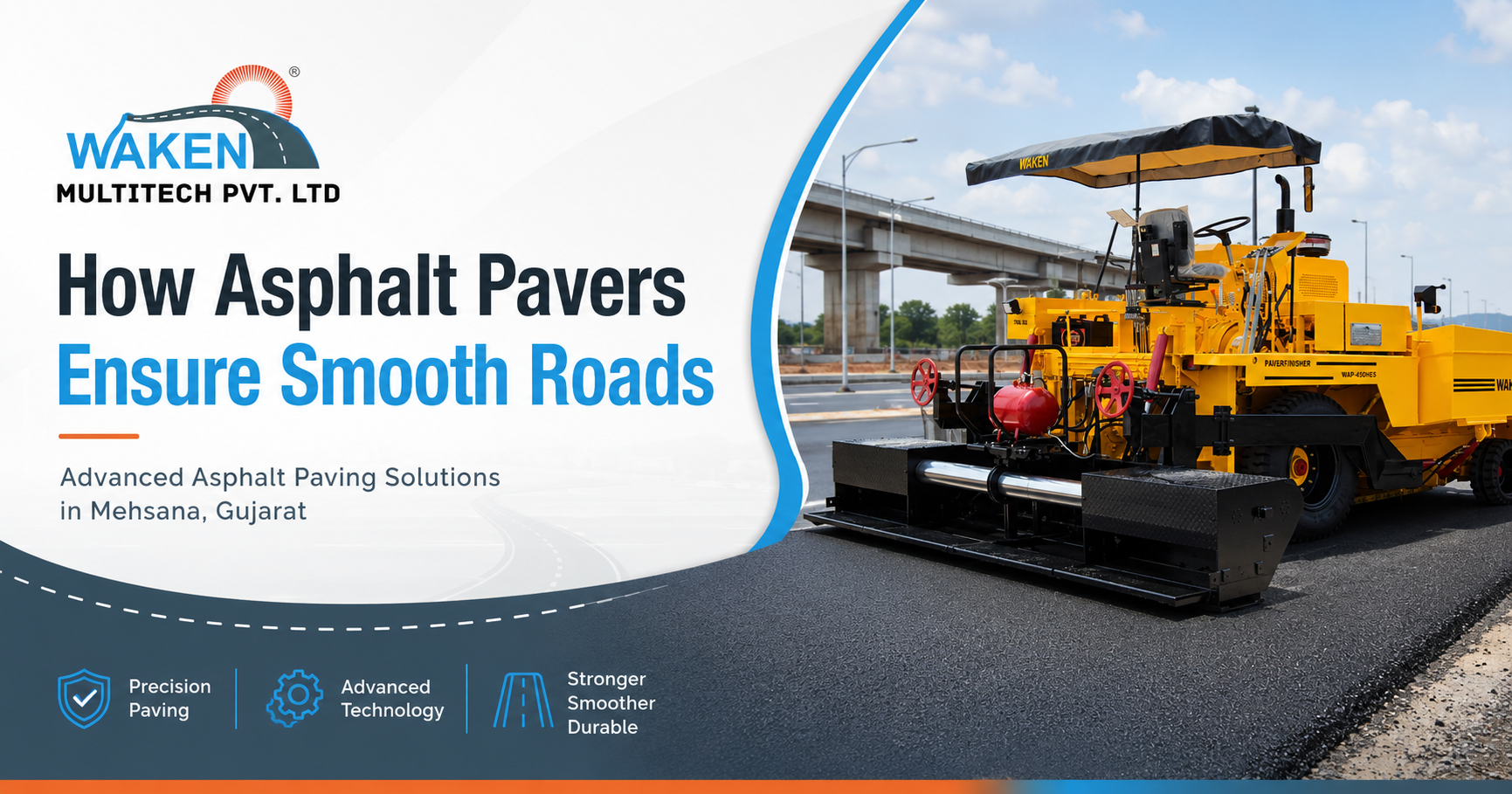
How Asphalt Pavers Ensure Smooth Roads
Discover how advanced asphalt pavers contribute to durable, smooth roads in Mehsana, Gujarat. Learn about key features, applications, and selection criteria for
Why This Matters in Mehsana, Gujarat
Mehsana, situated in the heart of Gujarat, is a region experiencing significant industrial and urban expansion. This growth necessitates a continuous upgrade and expansion of its road infrastructure to support increased traffic, facilitate trade, and connect burgeoning industrial zones. From state highways to local urban streets and rural links, the demand for well-constructed, long-lasting roads is paramount. The quality of paving directly influences project timelines, maintenance costs, and the overall economic viability of these infrastructural investments. Therefore, understanding the technology behind smooth road construction is crucial for stakeholders in Mehsana.
What is an Asphalt Paver — Overview
An asphalt paver, also known as an asphalt paving machine or paver finisher, is a piece of heavy construction equipment used to lay asphalt concrete on road surfaces, bridges, parking lots, and other similar areas. It receives asphalt mix from a dump truck, spreads it evenly over the prepared surface, and compacts it to a specific thickness and width. The machine's primary function is to create a uniform, smooth, and dense mat of asphalt, which is then further compacted by rollers to achieve the final road surface. This process is critical for ensuring the structural integrity and longevity of the pavement.
Key Features and Technical Specifications
Modern asphalt pavers incorporate several advanced features and technical specifications designed to enhance paving quality and operational efficiency:
- Variable Paving Widths: Adjustable screed extensions allow for flexible paving widths, accommodating diverse road dimensions.
- Hydrostatic Drive System: Provides smooth, stepless speed control and precise maneuverability, crucial for consistent paving.
- Sensor-Based Automatic Grade and Slope Control: Utilizes ultrasonic or laser sensors to maintain exact paving thickness and cross-slope, ensuring surface uniformity.
- High-Capacity Material Hoppers: Designed to hold a substantial volume of asphalt mix, minimizing interruptions during paving operations.
- Independent Conveyor and Auger Controls: Allows for precise material flow management to the screed, preventing segregation and ensuring even distribution.
- Ergonomic Operator Stations: Features intuitive controls, clear visibility, and comfortable seating to reduce operator fatigue and improve precision.
- Robust Engine Power: Provides sufficient power for continuous operation, material handling, and propulsion across varying terrains.
- Heated Screed Plates: Ensures the asphalt mix remains workable and achieves proper compaction, contributing to a smoother finish.
Industrial Applications and Use Cases
Asphalt pavers are versatile machines essential across a wide spectrum of construction projects requiring high-quality paved surfaces:
- National and State Highways: Constructing new lanes or resurfacing existing stretches to handle heavy traffic volumes.
- Urban Roads and Streets: Paving municipal roads, residential streets, and commercial areas, often requiring precise maneuvering in confined spaces.
- Airport Runways and Taxiways: Laying high-strength asphalt layers that can withstand the immense loads and stresses of aircraft.
- Industrial Complexes and Ports: Creating durable internal roads, loading docks, and storage areas for heavy machinery and logistics.
- Parking Lots and Recreational Areas: Paving large parking facilities for commercial establishments, stadiums, and public parks.
- Bridge Decks: Applying protective and wear-resistant asphalt layers on bridge surfaces.
- Rural Road Development: Facilitating connectivity in remote areas with efficient and cost-effective paving solutions.
How to Choose the Right Asphalt Paver
Selecting an appropriate asphalt paver involves evaluating several critical factors to ensure it meets specific project requirements and delivers long-term value. A thorough assessment helps in making an informed investment:
- Paving Capacity and Width: Match the machine's maximum paving width and output capacity to the typical scale of your projects.
- Screed Type and Technology: Consider the type of screed (e.g., fixed, extendable, high compaction) and its heating system, as this directly impacts finish quality.
- Automation and Control Systems: Assess the level of sensor-based grade and slope control, which is vital for achieving precise thickness and smoothness.
- Engine Power and Fuel Efficiency: Evaluate the engine's horsepower and its fuel consumption rates for operational cost-effectiveness.
- Material Handling System: Examine the design of the hopper, conveyors, and augers for efficient and uniform material distribution without segregation.
- Manufacturer Reputation and Support: Research the manufacturer's track record for reliability, spare parts availability, and after-sales service.
- Ease of Maintenance and Operation: Consider the machine's design for routine servicing and the simplicity of its control interface for operators.
- Compliance with Local Standards: Verify that the paver meets relevant safety and environmental regulations applicable in the region.
Quality Standards and Compliance
Adherence to established quality standards and compliance protocols is fundamental in road construction, ensuring the longevity and performance of paved surfaces. For asphalt pavers, this involves verifying that the equipment itself is manufactured to robust engineering specifications. Buyers should look for manufacturers who follow national and international standards for machinery design, material quality, and safety features. In India, relevant standards from organizations like the Bureau of Indian Standards (BIS) or specific IS codes for road construction materials and equipment are important benchmarks. Furthermore, the paver's ability to consistently achieve specified paving parameters, such as uniform thickness, density, and surface smoothness, is a direct measure of its quality and compliance with project specifications. Verifying these aspects before selection helps ensure the final road product meets the required engineering and safety criteria.
Why Waken Multitech Experience and Capability Matters
In the specialized field of road construction equipment, the experience and technical capability of the manufacturer are paramount. Waken Multitech Pvt. Ltd., established in 2015 by Mr. Rakesh Patel and Mr. Sandip Patel, brings over 15 years of technical expertise to the design and manufacturing of high-quality road construction equipment. Our facility on the Mehsana–Vijapur Highway is purpose-built to deliver reliable and innovative industrial solutions. We focus on engineering machines that offer durability, consistent performance, and operational efficiency, meeting both modern infrastructure requirements and global quality standards. Our approach involves meticulous quality control throughout the manufacturing process, from raw material selection to final assembly and testing. This commitment ensures that each asphalt paver is built to perform reliably in demanding construction environments, supported by our capability for customized fabrication solutions and responsive after-sales support.
Installation, Maintenance and Care Tips
Proper installation, regular maintenance, and diligent care are crucial for maximizing the operational life and performance of an asphalt paver. These practices ensure the machine consistently delivers smooth, high-quality road surfaces and minimizes downtime.
- Pre-Operation Checks: Before each shift, inspect fluid levels (engine oil, hydraulic fluid, coolant), tire pressure, and ensure all safety guards are in place. Verify that the screed heating system is functioning correctly.
- Regular Cleaning: After each use, thoroughly clean the hopper, conveyors, augers, and screed to prevent asphalt buildup, which can affect material flow and paving quality.
- Lubrication Schedule: Follow the manufacturer's lubrication chart for all moving parts, including bearings, chains, and pivot points, to reduce friction and wear.
- Screed Calibration: Periodically calibrate the screed's grade and slope sensors to maintain paving accuracy. Any misalignment can lead to uneven surfaces.
- Component Inspection: Regularly inspect wear parts such as screed plates, tamper bars, and conveyor chains for signs of wear or damage, replacing them as needed.
- Hydraulic System Care: Check hydraulic hoses and fittings for leaks or damage. Ensure the hydraulic fluid is clean and at the correct level to prevent system failures.
- Engine Maintenance: Adhere to the engine's service schedule for oil changes, filter replacements (air, fuel, oil), and cooling system checks.
- Operator Training: Ensure all operators are fully trained on the machine's controls, safety procedures, and proper paving techniques to optimize performance and prevent accidents.
Frequently Asked Questions
The primary function of an asphalt paver is to receive asphalt concrete mix, spread it evenly over a prepared surface, and compact it to a specified thickness and width. This process creates a uniform and dense asphalt mat, which is then further compacted by rollers to form the final smooth and durable road surface. It is a critical step in ensuring the structural integrity and longevity of any paved area.
Sensor-based automatic grade and slope control systems use ultrasonic or laser sensors to continuously monitor and adjust the screed's position. This technology ensures that the asphalt is laid at the exact specified thickness and cross-slope, regardless of minor irregularities in the underlying base. This precision results in a consistently smooth, uniform surface, reducing material waste and improving the overall quality and longevity of the road.
Asphalt pavers are generally categorized by their drive system and screed type. Common types include mechanical pavers, which use a mechanical drive, and hydrostatic pavers, which offer smoother, more precise control through hydraulic drives. Screed types can be fixed-width or extendable, and some advanced models feature high-compaction screeds that provide initial compaction, reducing the need for subsequent rolling.
The frequency of asphalt paver maintenance depends on usage intensity, operating conditions, and the manufacturer's recommendations. Generally, daily pre-operation checks are essential, along with weekly lubrication and cleaning. More extensive service, including fluid changes, filter replacements, and wear part inspections, is typically scheduled every 250-500 operating hours or annually, whichever comes first. Adhering to these schedules is vital for machine longevity.
Several factors influence the paving speed of an asphalt paver, including the type and thickness of the asphalt mix, the desired compaction level, the width of the paving mat, and the experience of the operator. Environmental conditions like temperature can also play a role. Maintaining a consistent, optimal speed is crucial for achieving uniform density and a smooth finish without creating irregularities in the pavement.
Uniform compaction is critical because it eliminates air voids within the asphalt mix, increasing the density and strength of the pavement. Properly compacted asphalt is less permeable to water, reducing the risk of freeze-thaw damage and stripping. It also improves the load-bearing capacity of the road, making it more resistant to rutting and cracking under traffic, thereby significantly extending its service life and reducing maintenance needs.
Conclusion
The construction of smooth, durable roads is a complex process where the asphalt paver stands as a central piece of equipment. Its ability to accurately spread and pre-compact asphalt mix is fundamental to achieving high-quality, long-lasting road surfaces. For regions like Mehsana, Gujarat, where infrastructure development is continuous, investing in reliable paving technology is an investment in economic growth and public safety. When selecting an asphalt paver, careful consideration of its technical features, the manufacturer's expertise, and a commitment to ongoing maintenance are crucial. These factors collectively ensure that the final road product meets the rigorous demands of modern traffic and environmental conditions, providing a foundation for sustained progress.
Get In Touch
Waken Multitech Pvt. Ltd.