
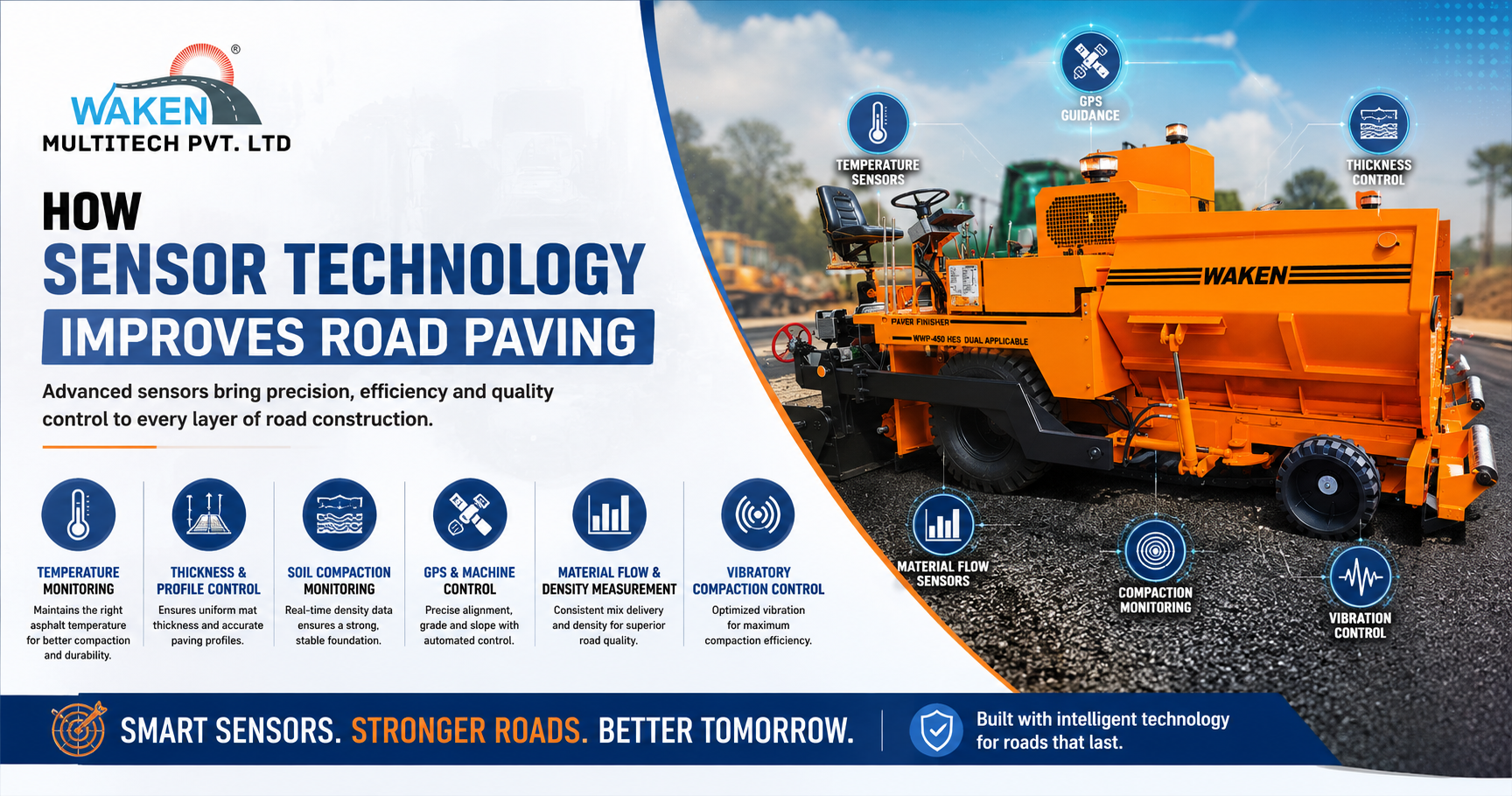
How Sensor Technology Improves Road Paving
Road paving is a critical aspect of infrastructure development, directly impacting transportation efficiency, safety, and longevity. Traditionally, achieving optimal results relied heavily on the experience of skilled operators and manual checks. However, the advent of sensor technology has ushered in a new era of precision, efficiency, and quality control in road construction. By integrating intelligent sensing capabilities into the paving process, contractors can achieve unprecedented levels of accuracy, reduce waste, and ensure a superior finished product. This guide explores precisely how sensor technology is revolutionizing road paving and the benefits it brings to the industry.
The Evolution of Road Paving Technology
The construction of roads has evolved significantly over centuries, from rudimentary techniques to sophisticated modern methods. Early paving relied on manual labor and basic tools. As materials science advanced, so did the machinery, leading to larger, more powerful equipment. The true paradigm shift, however, began with the integration of digital technologies. GPS, lasers, and sophisticated control systems started to enhance accuracy in grading and asphalt placement. The latest frontier in this evolution is the widespread adoption of advanced sensor technology, embedding intelligence directly into the paving process to provide real-time data and automated adjustments.
Key Applications of Sensor Technology in Road Paving
Sensor technology is deployed across various stages of the road paving process to enhance precision and control. These applications ensure that every layer of the road is constructed to exact specifications, contributing to its overall durability and performance.
Asphalt Temperature Monitoring
Sensors embedded in or attached to asphalt paving machines continuously monitor the temperature of the material as it is laid. Consistent temperature is crucial for proper compaction and achieving a smooth, durable surface. Real-time data allows operators to make immediate adjustments to paver speed or material flow, preventing issues like segregation or premature cooling.
Paving Thickness and Profile Control
Utilizing technologies like sonic sensors, infrared sensors, and GPS, pavers can accurately control the thickness of the asphalt mat being laid. These systems compare the actual mat thickness to the designed thickness and automatically adjust screed height, ensuring uniformity across the entire project. This minimizes material overuse and guarantees the road meets structural requirements.
Soil Compaction Monitoring
Before asphalt is laid, the base and sub-base layers must be adequately compacted. Soil compaction sensors, often integrated into rollers, measure the density and stiffness of the soil in real-time. This data helps operators determine where additional passes are needed, ensuring a stable foundation and preventing future road settlement or failure.
GPS and Machine Control Integration
Modern paving equipment integrates GPS technology with sensor data. This allows for precise positioning and guidance, ensuring that the paver follows the designed alignment and elevation. Combined with automatic screed control, GPS ensures consistent cross-slopes and gradients, significantly reducing the need for manual surveying and grade checking.
Material Flow and Density Measurement
Sensors can monitor the rate at which asphalt mix is being delivered and its density as it's placed. This helps maintain consistent mix quality and placement, preventing thin spots or over-thick areas that can compromise the road's integrity. Real-time feedback allows for immediate adjustments to the mix or delivery system.
Vibratory Compaction Control
For vibratory rollers, sensors can optimize the frequency and amplitude of the vibratory action based on the material properties and the real-time compaction feedback. This ensures maximum density is achieved efficiently without damaging the asphalt or causing excessive material displacement.
Tangible Benefits of Sensor-Equipped Road Paving
The integration of sensor technology into road paving operations yields substantial benefits, enhancing both the quality of the final product and the efficiency of the construction process.
- Improved Paving Quality and Durability: Consistent temperature, thickness, and compaction lead to a smoother, more uniform surface that is less prone to cracking, rutting, and other premature failures.
- Enhanced Efficiency and Speed: Real-time data and automated controls reduce the need for manual checks and rework, allowing paving crews to operate more efficiently and complete projects faster.
- Reduced Material Waste: Precise control over asphalt thickness and compaction minimizes over-application of materials, leading to significant cost savings and a more sustainable construction process.
- Increased Operator Precision: Sensors and machine control systems assist operators by providing clear guidance and automating complex adjustments, reducing reliance on individual skill levels and improving overall consistency.
- Better Project Documentation and Compliance: Integrated data logging provides a comprehensive record of paving conditions, material placement, and compaction levels, simplifying quality assurance and compliance with project specifications.
- Cost Savings: Reduced material waste, improved efficiency, fewer callbacks for repairs, and extended road lifespan all contribute to significant long-term cost savings for projects and taxpayers.
Choosing the Right Sensor Technology for Your Paving Needs
When selecting sensor technology for road paving projects, several factors should be considered to ensure optimal performance and return on investment. Waken Multitech Pvt. Ltd understands the complexities of modern construction and offers solutions designed to meet these challenges.
Buyer Insight: Integration is Key
The most effective sensor systems are those that seamlessly integrate with existing paving equipment and data management platforms. Look for solutions that offer real-time feedback and automated adjustments to maximize efficiency and accuracy on the job site.
Key Features to Look For:
- Accuracy and Reliability: Sensors must provide precise and consistent measurements under demanding site conditions.
- Real-time Data Feedback: Immediate data allows for proactive adjustments, preventing issues before they arise.
- Ease of Use and Integration: The system should be user-friendly for operators and compatible with your current fleet.
- Durability: Sensors must withstand harsh construction environments, including vibration, dust, and extreme temperatures.
- Data Logging and Reporting: Robust capabilities for tracking and reporting project data are essential for quality control and documentation.
- Versatility: The ability to adapt to different paving materials and project types can increase the value of the investment.
Questions to Ask Before Buying:
- What specific paving challenges does this sensor technology address?
- How does the system integrate with my current paving equipment (pavers, rollers)?
- What is the typical accuracy of the sensors under real-world conditions?
- How is the data collected, managed, and reported?
- What training and support are provided for operators and technicians?
- What is the expected lifespan and maintenance requirement of the sensors?
- Can the system be upgraded or adapted for future technological advancements?
Waken Multitech Pvt. Ltd: Enhancing Paving with Advanced Solutions
Waken Multitech Pvt. Ltd is committed to providing innovative solutions that enhance the efficiency and quality of infrastructure projects. Understanding the critical role of precision in road construction, the company leverages cutting-edge technology to support contractors in achieving superior results. Their expertise lies in integrating advanced systems that provide real-time data and intelligent control, enabling more accurate material placement, optimized compaction, and improved overall paving performance. By focusing on practical, reliable, and user-friendly technological applications, Waken Multitech empowers paving crews to meet and exceed project specifications, contributing to the development of more durable and sustainable road networks.
Frequently Asked Questions About Sensor Technology in Road Paving
What is the primary goal of using sensor technology in road paving?
The primary goal is to achieve greater precision and consistency in laying asphalt or other paving materials, ensuring optimal thickness, temperature, and compaction for enhanced durability and performance.
Can sensor technology really reduce material waste?
Yes, by ensuring precise control over the thickness of the paved layer and optimizing compaction, sensor technology significantly reduces the likelihood of over-applying materials, leading to material savings.
How does sensor technology improve the longevity of roads?
By ensuring all layers are constructed to exact specifications—uniform thickness, proper temperature, and adequate compaction—sensor technology minimizes weak points and leads to a more robust road structure, extending its service life.
Are these systems difficult for operators to use?
Modern sensor systems are designed with user-friendliness in mind. While some training is required, they often simplify complex tasks through automation and clear, real-time feedback, making it easier for operators to achieve high-quality results.
What kind of data do these sensors collect?
Sensors typically collect data on asphalt temperature, mat thickness, material density, lift thickness, compaction levels, paver speed, and GPS location. This data is vital for quality control, project documentation, and performance analysis.
Elevate Your Road Paving Projects
Ready to experience the precision, efficiency, and superior quality that sensor technology brings to road paving? Discover how Waken Multitech Pvt. Ltd's advanced solutions can transform your construction operations. Contact us today to learn more about our integrated paving technologies and how they can be tailored to your specific project requirements.
Request a Consultation