
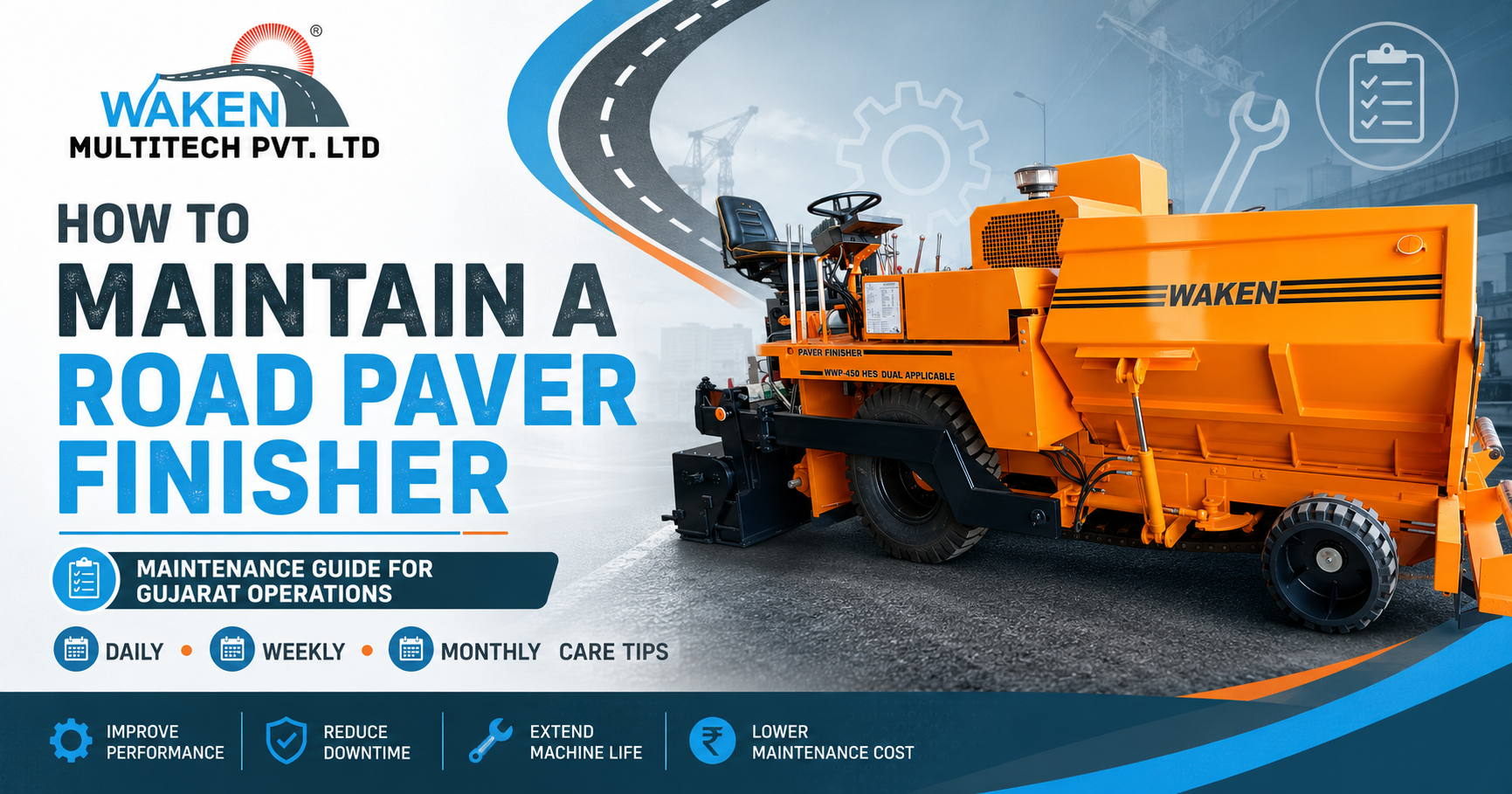
How to Maintain a Road Paver Finisher
Learn how to maintain a road paver finisher effectively to ensure longevity and optimal performance for construction projects in Gujarat.
Why This Matters in Gujarat
Gujarat's rapid industrial growth and extensive road network projects demand robust and consistently performing construction machinery. The state's diverse climate, from coastal humidity to inland heat, can impact equipment wear and tear. Reliable road paver finishers are essential for laying high-quality asphalt surfaces for national highways, state roads, and urban infrastructure. Companies operating in Mehsana and other industrial hubs rely on well-maintained equipment to meet project deadlines and uphold construction standards.
What is a Road Paver Finisher — Overview
A road paver finisher is a specialized piece of heavy equipment used in road construction to lay asphalt concrete on road surfaces. It receives asphalt mix from a dump truck, spreads it evenly across a specified width, and compacts it to a uniform thickness and smooth finish. These machines are fundamental for creating durable and level road infrastructure, crucial for both new construction and rehabilitation projects. Their precision directly impacts the quality and longevity of the final road surface.
Key Features and Technical Specifications
- Robust Chassis Design: Engineered for stability and endurance under heavy loads and continuous operation.
- Precision Screed System: Features hydraulic or mechanical screeds for accurate asphalt spreading and initial compaction.
- Automated Grade and Slope Control: Utilizes sensors to maintain consistent paving thickness and cross-slope.
- Powerful Engine Options: Provides reliable power for propulsion, hydraulic systems, and material handling.
- Material Conveying System: Equipped with robust conveyors and augers to distribute asphalt mix evenly across the screed.
- Operator-Friendly Controls: Ergonomically designed control panels for intuitive operation and monitoring.
- High Traction Undercarriage: Tracked or wheeled options for optimal grip and maneuverability on various terrains.
Industrial Applications and Use Cases
- National Highway Construction: Laying multi-lane asphalt surfaces for high-speed traffic corridors.
- State Road Development: Paving new state highways and upgrading existing road networks.
- Urban Infrastructure Projects: Constructing city roads, bypasses, and municipal pathways.
- Airport Runway Paving: Creating smooth and durable surfaces for aircraft takeoffs and landings.
- Industrial Estate Roads: Building access roads and internal networks within industrial parks.
- Bridge Deck Paving: Applying asphalt layers on bridge structures with specific thickness requirements.
- Resurfacing and Rehabilitation: Repairing and upgrading worn-out road surfaces to extend their lifespan.
How to Choose the Right Road Paver Finisher
Selecting the appropriate road paver finisher involves assessing several critical factors to match the equipment to project demands. Consider the types of paving projects your operation typically undertakes, including the required paving width and material types. The machine's capacity and power output must align with your operational scale and efficiency targets.
- Paving Width and Thickness Capability: Ensure the machine can handle the specific dimensions required for your projects.
- Engine Power and Fuel Efficiency: Evaluate the engine's output relative to operational demands and long-term running costs.
- Screed Type and Heating System: Determine if a fixed, extendable, or high-compaction screed with electric or gas heating is suitable.
- Automation and Control Systems: Look for advanced sensor-based controls for precise grade and slope management.
- Undercarriage Configuration: Choose between wheeled or tracked pavers based on mobility needs and ground conditions.
- Manufacturer Reputation and Support: Verify the supplier's track record for quality, spare parts availability, and technical assistance.
- Maintenance Accessibility: Assess the ease of access to critical components for routine servicing and repairs.
Quality Standards and Compliance
Adherence to quality standards is non-negotiable for road construction equipment. Buyers should verify that road paver finishers comply with relevant national and international standards, such as ISO certifications for manufacturing processes and specific Indian Standards (IS) for machinery components. Compliance ensures the equipment meets safety, performance, and environmental benchmarks. Always confirm that the manufacturer provides necessary documentation, including test certificates and conformity declarations, to validate these standards.
Why Company Experience and Capability Matters
The longevity and performance of a road paver finisher are directly linked to the manufacturer's experience and technical capability. Waken Multitech Pvt. Ltd., established in 2015 and backed by over 15 years of technical expertise, focuses on manufacturing durable and efficient road construction equipment. Our facility on the Mehsana–Vijapur Highway is equipped to produce machines that meet modern infrastructure requirements. We emphasize a robust manufacturing process, stringent quality control, and a skilled technical team. This approach ensures that each paver finisher is built for precision, reliability, and long-term operational value, supported by responsive after-sales service and customized fabrication solutions.
Installation, Maintenance and Care Tips
Proper installation and ongoing maintenance are crucial for maximizing the operational life and efficiency of a road paver finisher. Following a structured maintenance schedule helps prevent unexpected breakdowns and ensures consistent paving quality.
Pre-Operation Checks:
Before starting the machine each day, conduct a thorough visual inspection. Check fluid levels for engine oil, hydraulic oil, coolant, and fuel. Inspect all hoses and connections for leaks or damage. Verify that the screed heating system is functioning correctly and that all safety guards are in place. Ensure the conveyor and auger systems are clear of debris.
Daily Maintenance:
- Clean the Machine: Remove asphalt buildup from the screed, augers, conveyors, and tracks/wheels. This prevents material hardening and ensures smooth operation.
- Lubricate Key Points: Apply grease to all designated lubrication points, including pivot pins, bearings, and articulation joints, as specified in the operator's manual.
- Inspect Wear Parts: Check the condition of screed plates, tamper bars, conveyor chains, and auger flights. Replace any components showing excessive wear to maintain paving quality.
Weekly/50-Hour Maintenance:
- Filter Checks: Inspect and clean or replace air filters, fuel filters, and hydraulic filters as needed. Clogged filters can reduce engine performance and hydraulic efficiency.
- Belt and Chain Tension: Verify the tension of all drive belts and chains. Adjust them to the manufacturer's specifications to prevent slippage and premature wear.
- Electrical System Inspection: Check battery terminals for corrosion, inspect wiring for damage, and ensure all lights and safety alarms are operational.
Monthly/250-Hour Maintenance:
- Hydraulic System Check: Inspect hydraulic cylinders, pumps, and motors for leaks or unusual noises. Check hydraulic oil for contamination and replace if necessary.
- Engine Service: Perform an engine oil and filter change. Inspect fan belts, hoses, and radiator for any issues.
- Undercarriage Inspection: For tracked pavers, check track tension, rollers, and sprockets for wear. For wheeled pavers, inspect tire pressure and condition.
- Major Fluid Changes: Replace all hydraulic fluid, transmission fluid, and coolant.
- Component Overhaul: Inspect and service major components like the screed heating system, conveyor drives, and auger gearboxes.
- Calibration: Re-calibrate the grade and slope control systems to ensure paving accuracy.
- Structural Integrity: Inspect the chassis and frame for cracks or structural fatigue.
Storage and Off-Season Care:
When storing a paver finisher for an extended period, clean it thoroughly and protect all exposed metal surfaces with rust inhibitors. Drain and refill fluids, ensuring the fuel tank is full to prevent condensation. Disconnect the battery and store it in a cool, dry place. Cover the machine to protect it from elements.
Get In Touch
Waken Multitech Pvt. Ltd.