
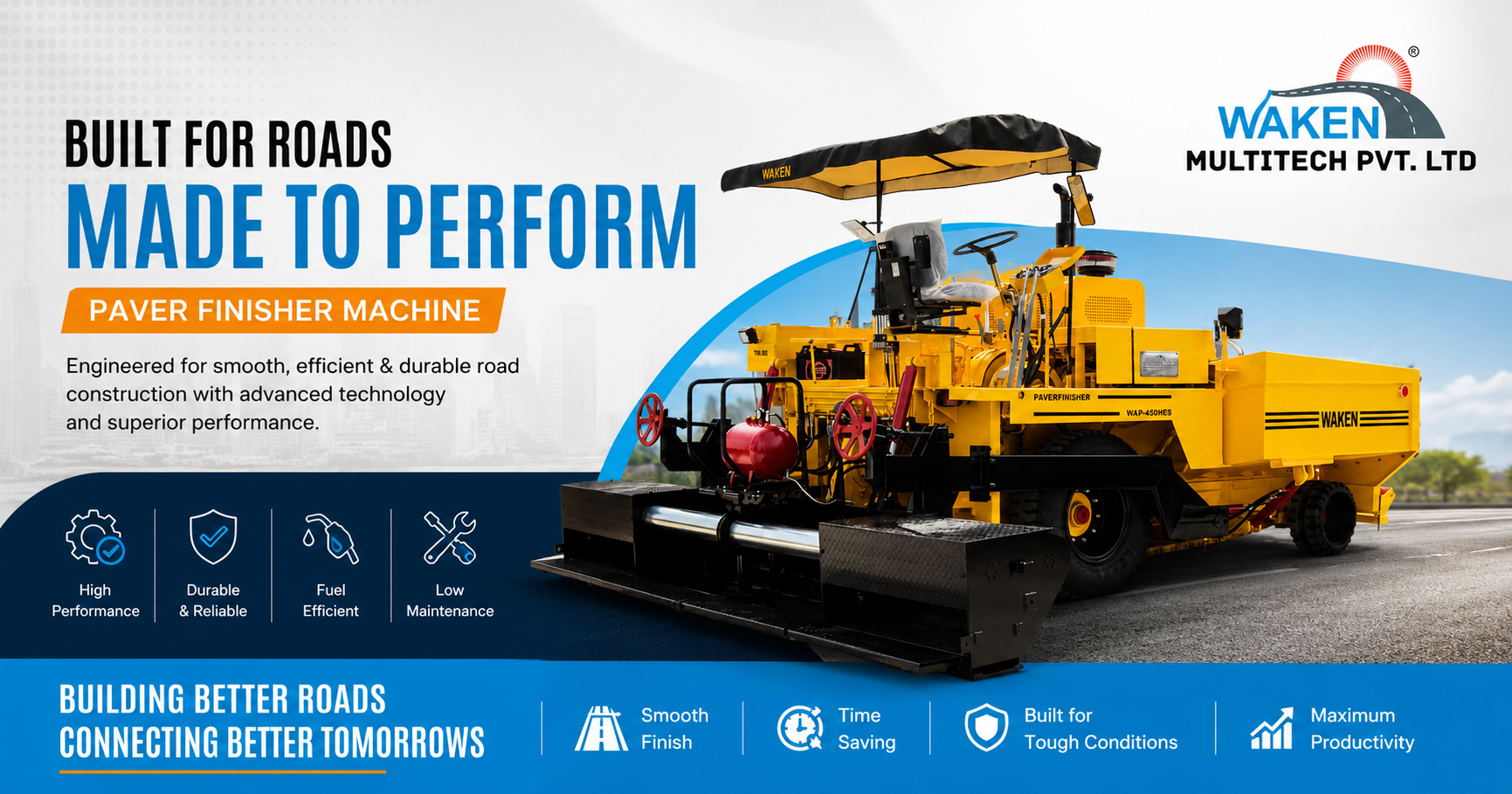
How to Select an Asphalt Paver Machine
Learn how to select an asphalt paver machine for road construction projects in Mehsana, Gujarat. Understand key features, applications, and quality standards.
Why This Matters in Mehsana, Gujarat
Gujarat, particularly regions like Mehsana, is experiencing significant infrastructure development, including new highways, industrial roads, and urban connectivity projects. The demand for robust and efficient road construction equipment is high, driven by industrial growth, expanding logistics networks, and urban development initiatives. Selecting an asphalt paver machine that can withstand local operating conditions, meet project timelines, and deliver consistent quality is crucial for contributing to the region's progress and ensuring long-term road performance.
What Is an Asphalt Paver Machine — Overview
An asphalt paver machine, also known as an asphalt finisher, is a piece of heavy construction equipment used to lay asphalt on roads, bridges, parking lots, and other surfaces. It receives asphalt mix from a dump truck, spreads it evenly over the prepared base, and provides initial compaction. Modern pavers are engineered for precision, ensuring uniform thickness and a smooth surface finish. They are fundamental to creating durable and high-quality road infrastructure.
Key Features and Technical Specifications
- Paving Width and Thickness: Adjustable screed width to accommodate various lane sizes and project scales, along with precise control over asphalt layer thickness.
- Engine Power and Type: Robust diesel engines providing sufficient power for heavy-duty paving operations and efficient fuel consumption.
- Hopper Capacity: Adequate material storage to maintain continuous paving flow and minimize interruptions.
- Control Systems: Options ranging from mechanical controls for basic operations to advanced hydrostatic drives and sensor-based automation for precise grade and slope control.
- Compaction System: Integrated vibratory screeds or tamping bars to achieve initial material compaction before roller application.
- Track or Wheel Configuration: Choice between tracked pavers for enhanced traction and stability on uneven terrain, or wheeled pavers for higher mobility and speed.
- Material Feeding System: Efficient conveyor and auger systems to distribute asphalt mix uniformly across the screed width.
- Operator Ergonomics: Well-designed operator stations with clear visibility and intuitive controls to enhance productivity and reduce fatigue.
Industrial Applications and Use Cases
- National and State Highways: Laying extensive stretches of asphalt for high-speed, heavy-traffic corridors.
- Urban and Municipal Roads: Paving city streets, residential roads, and public thoroughfares requiring precise maneuvering.
- Airport Runways and Aprons: Demanding applications requiring extremely smooth and durable surfaces to withstand aircraft loads.
- Industrial Estates and Ports: Constructing robust internal roads and loading areas for heavy industrial traffic.
- Commercial Parking Lots: Creating durable and aesthetically pleasing surfaces for retail centers and office complexes.
- Rural Road Development: Facilitating connectivity in remote areas with equipment capable of handling varied terrain.
How to Choose the Right Asphalt Paver Machine
Selecting an asphalt paver machine requires careful consideration of several operational and technical factors. A structured approach helps ensure the chosen equipment aligns perfectly with project demands and long-term operational goals.
- Project Scale and Type: Assess the typical paving width, length, and volume of asphalt required for your projects. Smaller machines suit urban or residential work, while larger pavers are for highways.
- Asphalt Mix Compatibility: Verify the paver's ability to handle various asphalt mixes, including dense-graded, open-graded, or wet mix materials, without compromising performance.
- Automation and Control Needs: Determine if manual, semi-sensor, or hydrostatic sensor controls are necessary for achieving the required paving accuracy and surface finish.
- Terrain and Site Conditions: Consider the ground conditions where the paver will operate. Tracked pavers offer better traction on soft or uneven ground, while wheeled pavers are more agile on firm surfaces.
- Maintenance and Serviceability: Evaluate the ease of routine maintenance, access to spare parts, and the availability of technical support from the supplier.
- Fuel Efficiency: Analyze the engine's fuel consumption rates, as this impacts operational costs over the machine's lifespan.
- Operator Training Requirements: Consider the complexity of the machine's controls and the training needed for your operating crew to maximize efficiency and safety.
- Regulatory Compliance: Ensure the machine meets all relevant safety and environmental regulations applicable in India.
Quality Standards and Compliance
Adherence to quality standards is paramount in road construction equipment. Buyers should verify that asphalt paver machines comply with relevant Indian Standards (IS codes) for construction machinery and safety. ISO certifications, such as ISO 9001 for quality management, indicate a manufacturer's commitment to consistent product quality. Additionally, components like engines should meet emission standards. Verifying these certifications and compliance factors before selection helps ensure the equipment is reliable, safe, and performs as expected over its operational life.
Why Company Experience and Capability Matters
The longevity and performance of an asphalt paver machine are significantly influenced by the manufacturer's experience and technical capability. Waken Multitech Pvt. Ltd., established in 2015 and backed by over 15 years of technical expertise, operates its facility on the Mehsana–Vijapur Highway. This experience translates into a deep understanding of road construction challenges and the engineering required to build durable and efficient equipment. The company's focus on robust design, precision controls, and reliable after-sales support ensures that their machines meet modern infrastructure requirements. Their capability to provide customized fabrication solutions further demonstrates a commitment to meeting specific project needs and delivering consistent quality.
Installation, Maintenance and Care Tips
Proper installation, regular maintenance, and diligent care are essential for maximizing the lifespan and operational efficiency of an asphalt paver machine.
- Pre-Operation Checks: Before each shift, inspect fluid levels, tire pressure (for wheeled pavers), track tension (for tracked pavers), and ensure all safety guards are in place. Verify that the screed heating system is functioning correctly.
- Regular Cleaning: Remove asphalt buildup from the screed, augers, and conveyors after each use. This prevents material hardening and ensures smooth operation.
- Lubrication Schedule: Follow the manufacturer's lubrication chart for all moving parts, bearings, and pivot points. Using the correct type and amount of lubricant is crucial.
- Component Inspection: Periodically check wear parts such as screed plates, tamper bars, and conveyor chains. Replace worn components promptly to prevent damage to other parts and maintain paving quality.
- Hydraulic System Care: Monitor hydraulic fluid levels and inspect hoses for leaks or damage. Clean or replace hydraulic filters as recommended to maintain system integrity.
- Engine Maintenance: Adhere to the engine manufacturer's schedule for oil changes, filter replacements, and air intake system checks.
- Operator Training: Ensure operators are thoroughly trained on the machine's controls, safety procedures, and basic troubleshooting. This reduces operational errors and extends equipment life.
Frequently Asked Questions
Mechanical pavers typically use a gearbox and chain drive system, offering robust power transmission suitable for basic paving tasks. Hydrostatic pavers, in contrast, utilize hydraulic pumps and motors to drive the machine and its components, providing smoother operation, more precise speed control, and enhanced maneuverability, especially beneficial for complex paving patterns.
Sensor technology in asphalt pavers, such as ultrasonic or laser sensors, continuously monitors the grade and slope of the paved surface. These sensors feed real-time data to the machine's control system, allowing for automatic adjustments to the screed. This ensures a consistent paving thickness and a uniform surface profile, significantly improving the overall quality and smoothness of the road.
The lifespan of an asphalt paver machine is influenced by several factors, including the quality of its manufacturing, the regularity and thoroughness of maintenance, the skill of its operators, and the severity of the operating conditions. Machines that receive consistent servicing, operate within their design limits, and are handled by trained personnel tend to have a significantly longer and more productive life.
Many manufacturers offer customization options for asphalt paver machines to meet unique project requirements. This can include modifications to screed width, specialized material handling systems, or integration of specific control features. Discussing project-specific needs with the manufacturer early in the selection process can ensure the machine is tailored for optimal performance.
Reliable after-sales support is crucial for minimizing downtime. This typically includes access to genuine spare parts, technical assistance, on-site service, and operator training programs. A manufacturer with a strong service network and experienced technicians can provide timely support, ensuring the paver machine remains operational and productive throughout its service life.
Screed width is a primary consideration as it determines the width of the asphalt layer laid in a single pass. Matching the screed width to typical project lane widths or desired paving dimensions is essential for efficiency. Adjustable screeds offer versatility, allowing the machine to adapt to varying project requirements without needing multiple machines.
Conclusion
Selecting an asphalt paver machine is an investment that profoundly impacts the success and longevity of road construction projects. For operations in Mehsana, Gujarat, a thorough evaluation of technical specifications, application suitability, and adherence to quality standards is paramount. Partnering with an experienced manufacturer that understands the nuances of road building equipment, offers robust machines, and provides reliable support ensures that your investment delivers consistent performance and contributes to durable infrastructure.
Get In Touch
Waken Multitech Pvt. Ltd.