
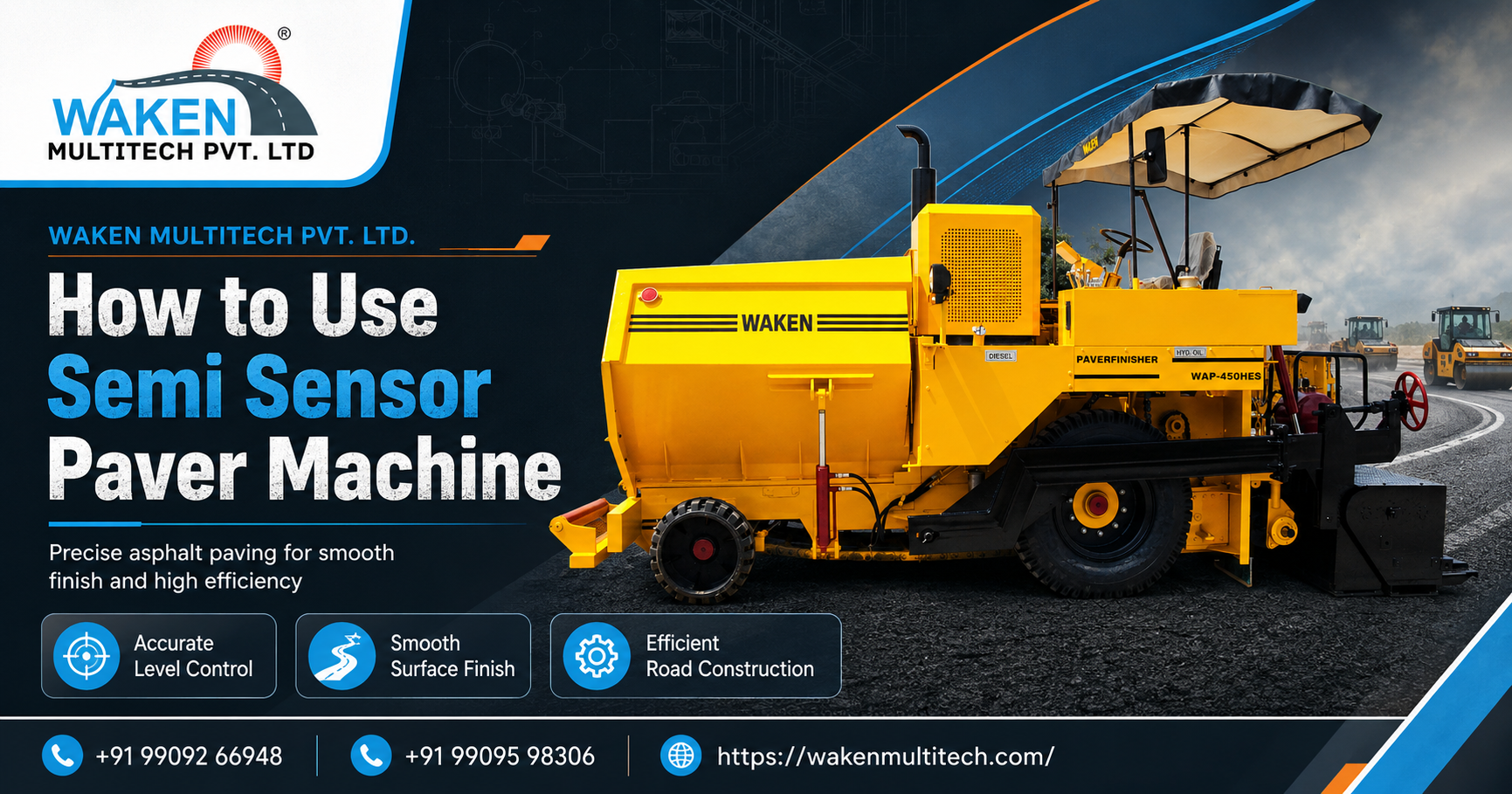
How to Use Semi Sensor Paver Machine
Learn how to effectively operate a Semi Sensor Paver Machine for precise asphalt paving, ensuring smooth finishes and high efficiency in Gujarat's road projects
Why This Matters in Gujarat
Gujarat's ambitious infrastructure development plans necessitate advanced construction machinery. The state's focus on improving connectivity for its industrial hubs and agricultural centers means a continuous pipeline of road construction and upgrade projects. A Semi Sensor Paver Machine is particularly relevant here, as it allows for the precise application of asphalt mixes required for high-traffic corridors and complex urban road layouts. Efficient operation of these machines directly impacts project timelines, material wastage, and the overall quality and longevity of the road surface, making them indispensable for meeting Gujarat's construction demands.
What is a Semi Sensor Paver Machine — Overview
A Semi Sensor Paver Machine is a specialized piece of road construction equipment designed for laying asphalt or other paving materials with a high degree of precision. It combines mechanical components with electronic sensors to control the screed's height and angle, ensuring a consistent paving thickness and a smooth surface finish. The "semi-sensor" aspect means that while sensors guide critical aspects of the paving process, the operator retains significant control over machine functions and adjustments. This technology is crucial for achieving uniform compaction and eliminating surface irregularities, which are essential for modern road durability and ride quality.
Key Features and Technical Specifications
The operational effectiveness of a Semi Sensor Paver Machine is derived from its robust design and advanced features. Understanding these specifications is the first step towards proficient operation and maintenance.
- Hydraulically Extendable Screed: Allows for variable paving widths, adapting to different lane sizes and project requirements.
- Semi-Sensor Technology: Utilizes sensors to maintain a consistent screed height, ensuring uniform mat thickness.
- 105 HP Engine Output: Provides ample power for efficient operation, even on challenging gradients or with dense material.
- 4 Cubic Meter Hopper Capacity: Reduces the frequency of truck reloads, enhancing continuous paving operations.
Paving Width Range (2.5 – 4.5 m): Offers flexibility for various road types, from narrow lanes to multi-lane highways.
Paving Thickness Control (10 – 200 mm): Enables precise layer thickness adjustments as per project specifications.
- Power Steering: Enhances maneuverability and operator comfort during operation.
- Robust 10-Ton Weight: Provides stability and ensures effective compaction during the paving process.
Industrial Applications and Use Cases
The versatility of a Semi Sensor Paver Machine makes it suitable for a wide array of road construction and maintenance tasks across various sectors.
- Highway Construction and Widening: Laying large volumes of asphalt for new highways or expanding existing ones to accommodate increased traffic.
- Urban Road Rehabilitation: Repairing and resurfacing city streets, ensuring smooth traffic flow and improved ride quality.
- Industrial Estate Roads: Paving access roads within industrial zones, requiring durability for heavy vehicle traffic.
- Airport Runways and Taxiways: Achieving the extremely smooth and uniform surfaces demanded by aviation standards.
- Bridge Deck Surfacing: Applying asphalt layers on bridge decks where precise thickness and finish are critical for structural integrity and ride comfort.
- Rural Road Improvement: Upgrading rural access roads to enhance connectivity and support local economies.
- Parking Lot Construction: Creating durable and well-finished surfaces for commercial and public parking areas.
- Footpaths and Cycle Tracks: Providing smooth and safe surfaces for pedestrian and cyclist use.
How to Choose the Right Semi Sensor Paver Machine
Selecting the appropriate Semi Sensor Paver Machine is crucial for project success. Consider these factors to ensure you acquire a machine that meets your specific operational needs.
- Paving Width Requirements: Assess the typical widths of projects you will undertake. Ensure the machine's extendable screed can accommodate your widest and narrowest needs.
- Material Handling Capacity: Consider the hopper capacity and its compatibility with your typical asphalt delivery logistics to maintain continuous paving.
- Engine Power and Fuel Efficiency: Match the engine horsepower to the terrain and typical project demands. Look for fuel-efficient models to manage operating costs.
- Sensor System Accuracy and Reliability: Investigate the type and reputation of the sensor system. Ensure it offers the precision required for your quality standards.
- Operator Comfort and Ergonomics: A comfortable operator is a more productive and safer operator. Evaluate the cabin design, controls, and visibility.
- Manufacturer Support and Service Network: Verify the availability of spare parts and qualified service technicians in your operational region.
- Build Quality and Durability: Examine the machine's construction, materials, and reputation for longevity in demanding conditions.
- Customization Options: Determine if the manufacturer can provide specific configurations or attachments to suit unique project requirements.
Quality Standards and Compliance
Adherence to quality standards and regulatory compliance is non-negotiable in road construction. When procuring a Semi Sensor Paver Machine, it is essential to verify that the equipment and its manufacturer meet relevant industry benchmarks. Look for machines that are built in accordance with national and international standards such as ISO certifications for manufacturing processes. While specific paver machine standards might vary, ensuring the manufacturer has robust quality control systems in place is paramount. This includes verifying the quality of components used, the precision of assembly, and the thoroughness of pre-delivery testing.
Furthermore, understanding the compliance requirements for road construction projects in your specific region, such as adherence to specifications set by national highways authorities or local municipal bodies, is vital. A reputable manufacturer will be able to provide documentation or assurance that their equipment is designed to meet these performance and quality expectations, contributing to the overall integrity and compliance of the finished road.
Why Waken Multitech's Experience and Capability Matters
At Waken Multitech Pvt. Ltd., our extensive experience in manufacturing road construction equipment forms the bedrock of our capability. We understand the critical demands placed on paving machinery in real-world applications. Our manufacturing process is meticulously designed to ensure precision and durability, utilizing high-quality materials and advanced fabrication techniques. Our technical team comprises seasoned engineers and technicians with deep expertise in hydraulics, electronics, and mechanical systems, enabling us to develop and refine our Semi Sensor Paver Machines for optimal performance.
Our commitment to quality control is unwavering, with rigorous testing at every stage of production. This ensures that each machine leaving our facility is reliable and built to last. We pride ourselves on our ability to offer customization options, tailoring our equipment to meet the unique challenges and specifications of diverse projects. This dedication to engineering excellence, coupled with a focus on delivering dependable equipment and responsive after-sales support, makes Waken Multitech a trusted partner for your road construction needs.
Installation, Maintenance, and Care Tips
Proper operation, regular maintenance, and diligent care are essential for maximizing the lifespan and performance of your Semi Sensor Paver Machine. Following these guidelines will help ensure consistent results and minimize downtime.
Pre-Operation Checks:
Before each use, conduct a thorough visual inspection of the machine. Check for any loose connections, leaks, or damaged components.
Verify all fluid levels, including engine oil, hydraulic fluid, and coolant. Top up as necessary.
Ensure all safety guards and emergency stop buttons are functional.
Test the steering and braking systems to confirm they are operating correctly.
During Operation:
Always operate the machine within its specified parameters for paving width, thickness, and speed.
Monitor the sensor system closely to ensure it is accurately maintaining the desired screed height.
Maintain a consistent flow of asphalt into the hopper and ensure the augers are distributing material evenly.
Avoid sudden stops or sharp turns, especially when the screed is deployed.
Routine Maintenance:
Follow the manufacturer's recommended maintenance schedule for greasing, oil changes, and filter replacements.
Clean the machine thoroughly after each use, paying special attention to the screed, hopper, and conveyor systems to prevent material buildup.
Inspect the wear parts on the screed and replace them as needed to maintain surface quality.
Periodically check the calibration of the sensor system to ensure accuracy.
Keep the engine compartment clean and free from debris.
Storage:
When not in use for extended periods, clean the machine thoroughly, lubricate all moving parts, and store it in a dry, protected area.
- Consider using protective covers to shield the machine from the elements.
Frequently Asked Questions
The main advantage of a semi-sensor paver is its ability to achieve a much smoother and more uniform surface finish. The sensors automatically adjust the screed height based on the terrain and desired mat thickness, reducing reliance on manual adjustments and minimizing variations that can occur with purely mechanical systems.
The semi-sensor system uses electronic sensors, often guided by a string line or a sonic averaging system, to detect the surface profile or desired height. This information is fed to a control unit that signals hydraulic actuators to adjust the screed's position in real-time, maintaining the programmed thickness across varying ground conditions.
The sensor system requires regular cleaning of the sensors themselves to ensure accurate readings. Periodic checks for proper calibration and ensuring all electrical connections are secure are also important. Manufacturers provide specific guidelines for sensor maintenance to ensure optimal performance.
Yes, a semi-sensor paver is designed to handle a wide range of asphalt mixes, including hot mix asphalt (HMA) and warm mix asphalt (WMA). The machine's robust construction and precise screed control ensure it can effectively lay various material types as per project specifications.
With proper operation, regular maintenance, and timely replacement of wear parts, a Semi Sensor Paver Machine can have a significant operational lifespan, often exceeding 10-15 years. The durability of its components and the quality of its manufacturing play a crucial role in its longevity.
The paving width is adjusted using the hydraulically extendable screed. Operators can extend or retract the screed sections using hydraulic controls to achieve the desired paving width, typically ranging from 2.5 to 4.5 meters for this model, allowing adaptation to different lane sizes and project requirements.
Conclusion
Mastering the operation of a Semi Sensor Paver Machine is fundamental to achieving high-quality, efficient road construction. By understanding its advanced features, adhering to best practices for operation and maintenance, and selecting a machine that aligns with your project's specific demands, you can ensure superior paving results. The integration of semi-sensor technology offers a significant advantage in achieving consistent thickness and a smooth finish, crucial for the longevity and safety of modern roadways. Partnering with an experienced manufacturer like Waken Multitech ensures you receive equipment built for reliability and performance, backed by the expertise needed to support your infrastructure development goals.
Get In Touch
Waken Multitech Pvt. Ltd.