
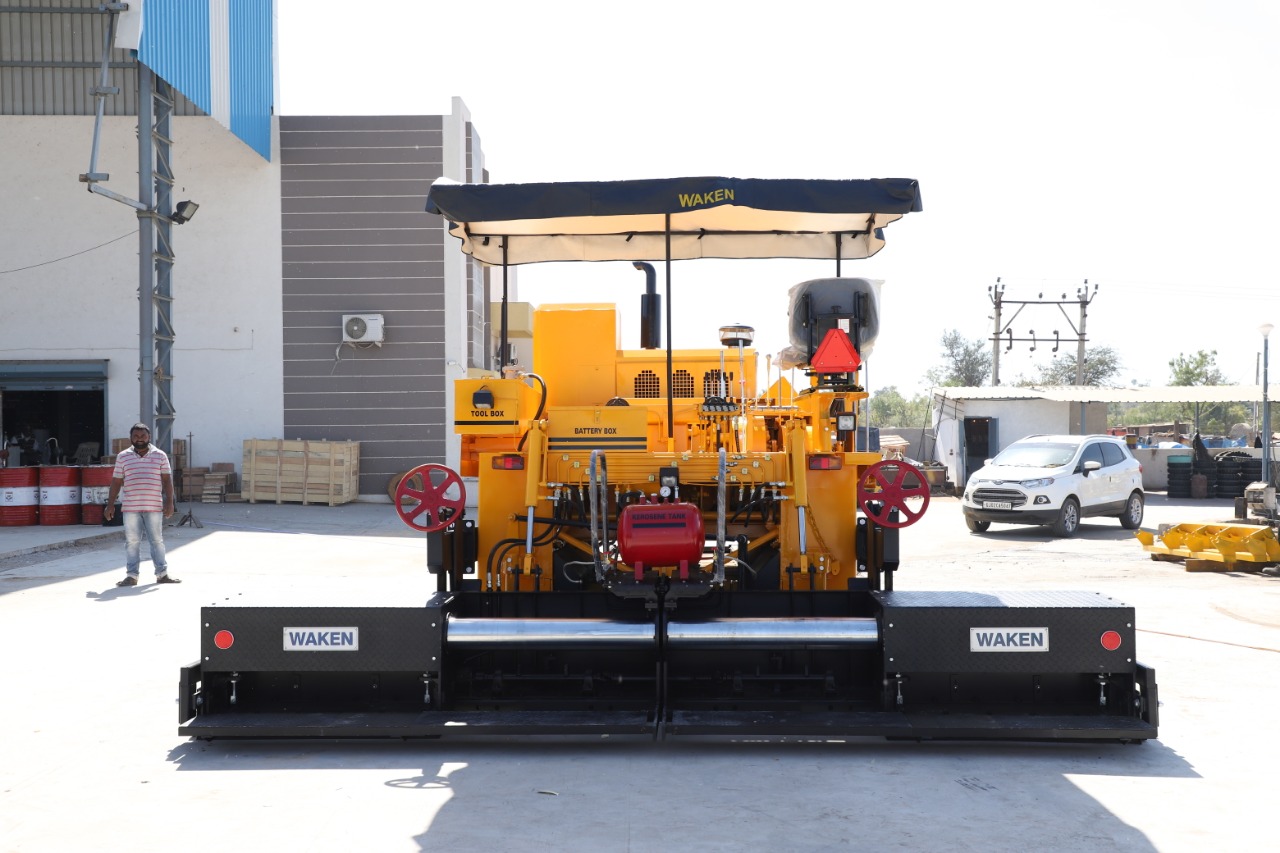
Hydrostatic Sensor Paver Finisher
A Hydrostatic Sensor Paver Finisher is a modern piece of equipment used in the road construction industry, specifically designed to lay and finish asphalt surfaces. It incorporates hydrostatic drive systems for smooth operation and sensor technologies to ensure precise material placement, thickness, and quality control. These advanced machines are vital for the construction of highways, streets, and airports, as they ensure uniformity and accuracy during the paving process.
As a leading manufacturer and supplier of Hydrostatic Sensor Paver Finishers, we offer state-of-the-art solutions that provide outstanding performance, durability, and efficiency in road construction projects.
Key Features
-
Hydrostatic Drive System:
-
A hydrostatic drive system provides smooth and precise control of the paver’s speed and operation, ensuring that the machine operates efficiently across a variety of terrain types. This feature helps in reducing wear and tear while enhancing fuel efficiency.
-
-
Automatic Material Thickness Control:
-
Equipped with sensor technologies, the paver automatically adjusts the material thickness to ensure consistent paving quality. The sensors work in real-time, ensuring precise control over the asphalt layer’s thickness, leading to a smoother and more uniform finish.
-
-
High Productivity:
-
The hydrostatic drive and sensor systems work in tandem to enhance the paving speed while maintaining quality, leading to high productivity levels. The paver is designed for high-volume operations, making it ideal for large-scale projects.
-
-
Advanced Control System:
-
A digital control system allows operators to easily adjust settings, monitor performance, and receive feedback on the machine’s operation. This user-friendly interface reduces operator fatigue and enhances the overall efficiency of the project.
-
-
Precise Grade and Slope Control:
-
With the integrated sensor system, the paver maintains precise grade and slope control throughout the operation, allowing for more accurate paving and smoother road surfaces.
-
-
Efficient Power System:
-
The machine is powered by a highly efficient engine, which provides optimal fuel efficiency and minimizes emissions. The engine is paired with a hydrostatic transmission, offering seamless power transmission and reducing energy loss.
-
-
Ergonomic Design:
-
The operator’s cabin is designed for maximum comfort, with adjustable seats and controls. This ensures that operators can work for extended periods without fatigue, leading to more efficient work on the job site.
-
-
Enhanced Safety Features:
-
Hydrostatic sensor pavers come with safety features like automatic stop systems, emergency brake systems, and advanced lighting for night operations, making them safe for use in challenging environments.
-
-
Durability and Maintenance:
-
The materials used in the construction of the paver are robust, ensuring that the machine is highly durable and can withstand the harsh conditions of road construction. The system is designed for easy maintenance, ensuring long-term reliability and reduced downtime.
-
Applications
-
Highway Construction:
-
Hydrostatic sensor pavers are extensively used in the construction of highways, where speed, precision, and quality are essential. The ability to maintain consistent material thickness ensures smooth, long-lasting roads.
-
-
Urban Road Construction:
-
In urban environments, these pavers are employed to create durable road surfaces. Their ability to handle a wide range of material types and thicknesses makes them ideal for paving city streets and roads.
-
-
Airport Runways:
-
The precision control offered by hydrostatic sensor pavers makes them perfect for paving airport runways. These surfaces require extreme accuracy in material thickness and smoothness to ensure safe and efficient takeoffs and landings.
-
-
Bridge Decks:
-
Hydrostatic sensor pavers are used in the construction of bridge decks, where maintaining consistent thickness and smooth finishes is critical for durability and structural integrity.
-
-
Rehabilitation and Resurfacing:
-
These pavers are also used in road rehabilitation and resurfacing projects. Their ability to precisely control the asphalt thickness ensures that the new surface matches the required specifications.
-
-
Parking Lots and Pavement Projects:
-
For smaller-scale projects like parking lots, hydrostatic sensor pavers provide the necessary precision and efficiency, reducing the need for manual adjustments during the paving process.
-
-
Rail Tracks and Industrial Roads:
-
They are used in laying the foundation for rail tracks and industrial access roads, where smoothness and accurate layer thickness are crucial for long-term functionality and performance.
-
FAQ
1. What is a Hydrostatic Sensor Paver Finisher?
A Hydrostatic Sensor Paver Finisher is a paving machine that uses a hydrostatic drive system for smooth operation and sensor technology to precisely control material placement, thickness, and surface quality during road construction. It is commonly used for highway, airport, and urban road paving projects.
2. What are the benefits of using a Hydrostatic Sensor Paver Finisher?
-
Precision and Consistency: Ensures uniform material thickness and smoothness for high-quality road surfaces.
-
Improved Efficiency: The hydrostatic drive and sensor system allow for faster and more precise paving, reducing labor and operational costs.
-
Enhanced Safety: Equipped with advanced safety features such as emergency stops and automatic control systems.
-
Durability and Low Maintenance: Designed to withstand harsh conditions, requiring minimal downtime for maintenance.
-
Fuel Efficiency: The efficient power system reduces fuel consumption, lowering operational costs.
3. How does the hydrostatic drive system work?
The hydrostatic drive system uses hydraulic motors and pumps to transfer power to the paver’s tracks or wheels, allowing smooth and responsive movement. This system provides precise control over speed and torque, resulting in better handling and reduced energy loss compared to traditional mechanical drives.
4. Can the paver be used for both large-scale and small-scale projects?
Yes, hydrostatic sensor pavers are versatile and can be used for both large-scale projects (e.g., highways, airports) and smaller projects (e.g., city streets, parking lots). Their adjustable settings allow them to adapt to various paving conditions and requirements.
5. How do the sensors help in material thickness control?
The sensors monitor the thickness of the material in real-time during the paving process. They automatically adjust the material flow to maintain consistent thickness, ensuring that the asphalt layer is uniform across the entire surface, which is critical for road durability and quality.
6. Is operator training required to use the Hydrostatic Sensor Paver?
While the paver’s digital control system is user-friendly, operator training is highly recommended to ensure safe and efficient use of the equipment. Proper training will help operators understand the machine’s features, including the sensor and control systems, optimizing its performance.
7. What types of surfaces can be paved with a Hydrostatic Sensor Paver?
Hydrostatic sensor pavers are versatile and can be used to pave a variety of surfaces, including asphalt, concrete, and other road construction materials. They are used on highways, airport runways, urban roads, bridge decks, and industrial surfaces.
8. How much maintenance does a Hydrostatic Sensor Paver require?
Hydrostatic sensor pavers are designed for minimal maintenance. Routine checks on components like hydraulic systems, filters, fuel systems, and control systems are recommended to ensure the machine operates at peak efficiency. The paver’s easy-to-access design makes routine maintenance simple.
9. What is the lifespan of a Hydrostatic Sensor Paver?
With proper maintenance, a Hydrostatic Sensor Paver can last for many years, typically between 10-15 years, depending on usage, maintenance, and the specific brand/model. The machine’s durable design ensures it remains operational for a long time, even in demanding conditions.
10. How does a Hydrostatic Sensor Paver contribute to environmental sustainability?
Hydrostatic sensor pavers are designed with fuel-efficient systems that minimize energy consumption, thus reducing emissions. Their precise control of material flow also ensures less waste, contributing to more sustainable road construction practices.
Conclusion
A Hydrostatic Sensor Paver Finisher is an essential piece of equipment for modern road construction projects. With its hydrostatic drive system, sensor technology, and high efficiency, it ensures precise paving, consistent material thickness, and improved productivity. Whether you're working on a highway, airport, or urban road project, investing in a Hydrostatic Sensor Paver Finisher ensures quality, efficiency, and long-lasting results.