
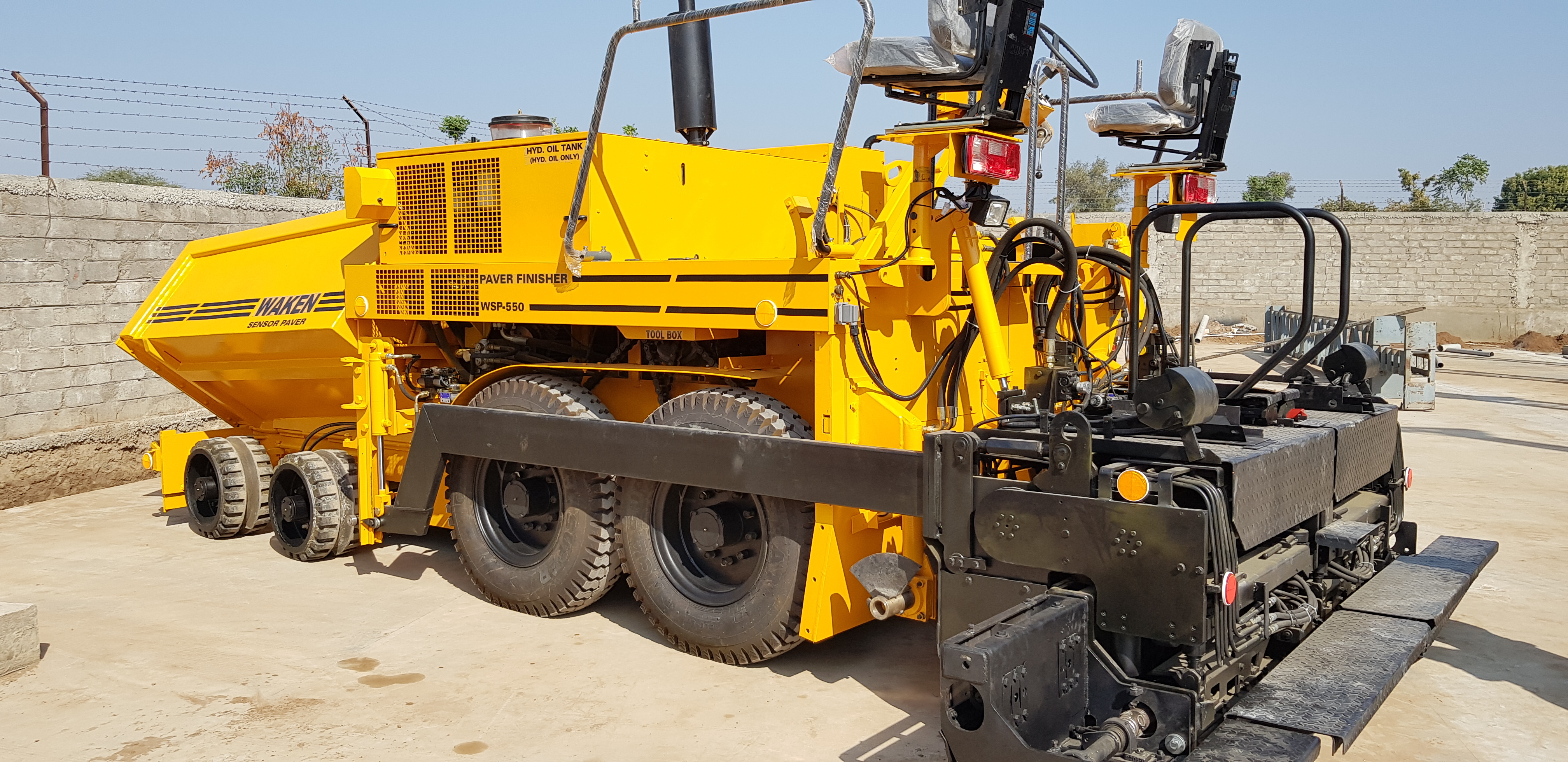
Introduction to Precision Paving with Hydrostatic Sensors
Precision Paving with Hydrostatic Sensors defines the modern standard for road construction quality, especially relevant for India’s ambitious infrastructure goals. This advanced method combines non-contact or contact sensors with highly responsive hydrostatic paver controls to guarantee extremely tight tolerances in grade and cross-slope. The result is a uniformly smooth and durable pavement that significantly exceeds conventional quality benchmarks. This technology is vital for minimizing material usage, reducing the International Roughness Index (IRI), and ensuring compliance with stringent project specifications for long-life roads. Embracing this precision technology is key for contractors seeking operational efficiency and long-term project success; learn more about hydrostatic paver solutions.
Working Principle and Process Flow of Precision Paving with Hydrostatic Sensors
The system operates on a closed-loop feedback mechanism: first, multiple highly sensitive sensors (e.g., ultrasonic, mechanical, or 3D) precisely measure the deviation between the target elevation and the actual screed position. This deviation data is immediately transmitted to the paver's electronic control unit. The unit then modulates the flow of high-pressure fluid within the hydrostatic system, instantly making fine adjustments to the hydraulic cylinders controlling the screed height and slope. This continuous, immediate, and proportional correction ensures the paver lays down the material at a constant, exact thickness and grade, regardless of variations in the base layer or paving speed. This rapid automation makes it a cornerstone of automated paving machinery.
Types of Precision Paving with Hydrostatic Sensors
- Single-Sensor Grade Control: Focuses primarily on maintaining the desired vertical elevation from one side, suitable for simple slope profiles.
- Dual Grade and Slope Control Systems: Utilizes sensors on both sides, plus a slope sensor, to control both levelness and cross-fall with high precision.
- Contact Averaging Beam Systems: Employs a physical 'ski' reference spanning several meters to average out short-interval bumps on the underlying surface.
- Non-Contact Ultrasonic Sensor Arrays: Uses multiple sonic tracers to create a virtual, averaged reference line, minimizing wear and maximizing responsiveness.
- Total Station/GPS Controlled Paving: Stringless system guided by satellite and ground-based total stations for complex, variable-depth, and 3D designs.
Key Features and Specifications of Precision Paving with Hydrostatic Sensors
- Accuracy within $\pm 2$ mm: Capable of consistently maintaining finished pavement tolerances necessary for top-tier national projects.
- Proportional Hydraulic Control: Ensures smooth, nuanced screed adjustments, preventing noticeable pavement bumps or imperfections.
- Self-Diagnostics and Error Logging: Built-in software monitors sensor performance and system health, simplifying maintenance and reducing downtime.
- Wide Operating Temperature Range: Components are robustly designed to function reliably in the extreme heat conditions prevalent across India.
- Modular Sensor Connectivity: Supports the easy addition or swapping of various sensor types (e.g., sonic, slope, mechanical) based on specific site requirements.
Applications of Precision Paving with Hydrostatic Sensors
- High-Speed Corridor and Express Highway Construction: Crucial for achieving the high levels of pavement smoothness and ride comfort expected on new or upgraded multi-lane roadways, contributing directly to vehicle efficiency and safety over long distances.
- Airport Runway and Taxiway Overlays: Used to ensure the exceptionally tight flatness specifications needed for aircraft operations, managing water drainage and minimizing the risk of Foreign Object Damage (FOD) to maintain long-term runway integrity.
- Heavy Industrial and Port Yard Pavements: Lays concrete and asphalt with the precision required for stable stacking, heavy-duty material handling, and reducing wear on industrial vehicles operating continuously in highly demanding environments.
- Tunnels and Bridge Deck Paving: Allows pavers to accurately maintain complex, predefined geometric profiles, slopes, and transitions in confined spaces, compensating for underlying structural deflections with automated control.
Benefits of Using Precision Paving with Hydrostatic Sensors
- Optimized Material Utilisation: Achieves the specified thickness exactly, significantly minimizing the use of costly paving material and thereby providing a substantial cost saving on large-scale infrastructure projects.
- Exceptional Pavement Durability: Uniform material thickness and proper compaction achieved through precise control translate directly into a stronger, more consistent road structure with a notably longer service life.
- Higher Production Output: Automated grade and slope adjustments enable the paver to maintain a continuous, optimal paving speed, drastically improving overall site productivity and adherence to tight deadlines.
- Reduced Need for Corrective Measures: The high initial accuracy virtually eliminates the need for expensive and time-consuming processes like profiling, milling, or re-paving to meet smoothness requirements post-construction.
Top Manufacturers and Suppliers in India
The market for Precision Paving with Hydrostatic Sensors in India is highly dynamic, featuring top global manufacturers alongside several competent domestic companies. The international players are often leaders in 3D and ultrasonic sensor integration, focusing on large-scale, high-specification projects. In contrast, Indian suppliers have carved out a significant niche by offering rugged, reliable hydrostatic pavers and sensor systems that are perfectly adapted to local material properties and diverse job site requirements. A key differentiator for purchasers is the supplier's commitment to immediate local service and readily available spare parts, especially for sensitive electronic components, which ensures maximum uptime for precision-focused paving crews operating nationwide.
Maintenance and Safety Tips
- Regularly check and clean all sensor lenses and targets to ensure maximum measurement accuracy and zero signal interference.
- Inspect all hydrostatic lines and filters weekly for contamination or pressure leaks to maintain the responsiveness of the screed control.
- Conduct periodic calibration of the grade and slope sensors using certified benchmarks to ensure the precision of the entire system.
- Always verify that operators have been properly trained on the hydrostatic system's controls and emergency override procedures.
- Store sensor components securely when not in use to prevent mechanical damage or exposure to extreme weather elements.
FAQs – Precision Paving with Hydrostatic Sensors
Contact Details
Talk to our specialists today for tailored solutions and fast assistance.