
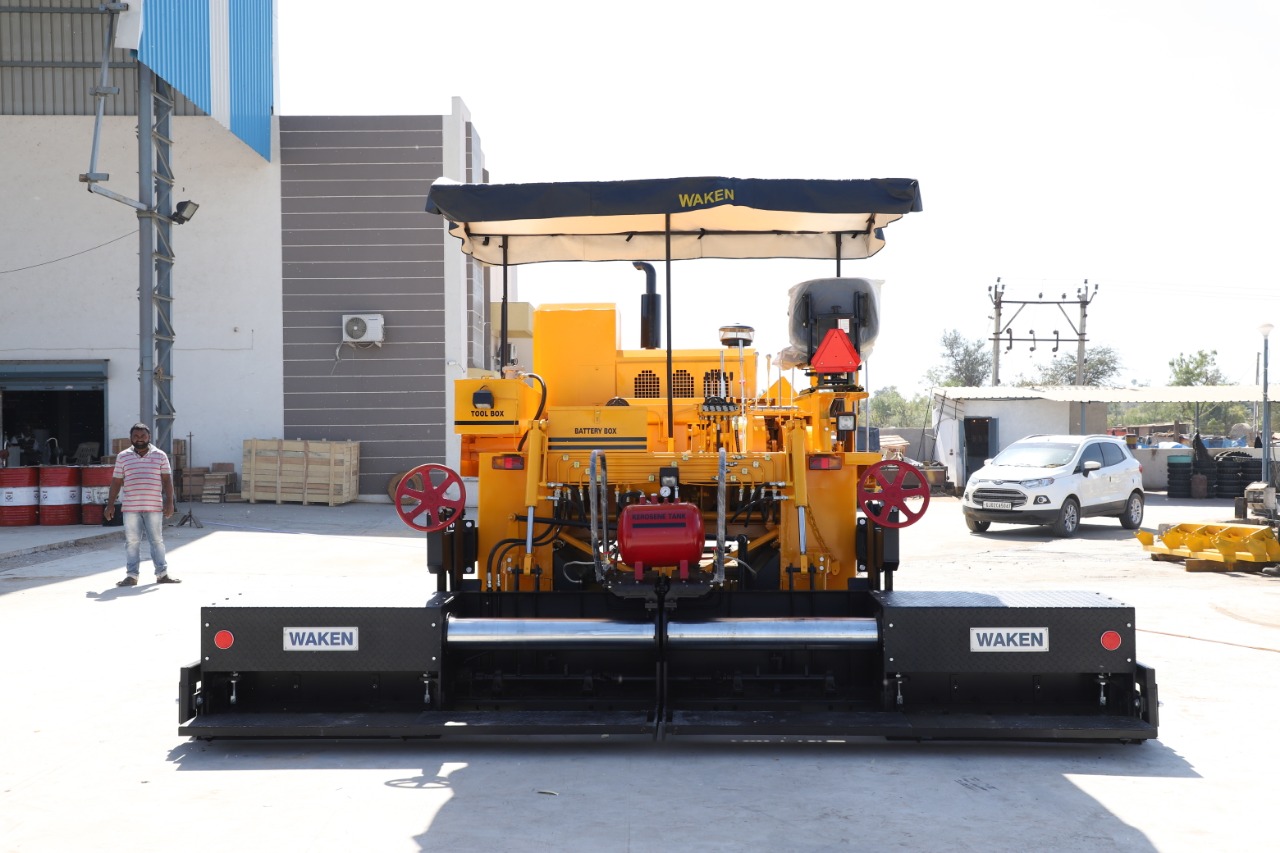
Introduction to Sensor-guided Paver Finisher
A Sensor-guided Paver Finisher is essential heavy machinery utilizing advanced electronic and hydraulic systems to automate the placement and initial compaction of paving materials. By integrating sophisticated non-contact sensors, like ultrasonic trackers or mechanical ski-sensors, these pavers maintain exceptional accuracy in pavement thickness, cross-slope, and grade. This technology is crucial for achieving the high International Roughness Index (IRI) standards mandated for modern roads and highways across India, significantly improving ride comfort and pavement longevity. The real-time, automatic corrections eliminate the inconsistencies often associated with manual control, leading to faster paving speeds and considerable savings on material costs. Discover how this equipment enhances road construction efficiency in India.
Working Principle and Process Flow of Sensor-guided Paver Finisher
The operational flow of a sensor-guided paver begins with sensors continuously measuring the elevation differences between the desired finished grade (established by a string line or existing mat) and the paver's screed. This data is instantly processed by the control unit. If a deviation is detected, the unit sends an immediate signal to the paver's electro-hydraulic system, which adjusts the screed's position via hydraulic cylinders. This constant, high-speed feedback loop ensures the screed floats precisely at the target elevation and slope, compensating for undulations in the base material. This precise control over material laydown is the foundation of a high-quality road surface; view our inventory of paving machine parts and control systems for maintenance needs.
Types of Sensor-guided Paver Finisher
- Stringline-Referenced Sensor Pavers: These utilize mechanical or sonic sensors to precisely track a physical guide wire for exceptional vertical grade control.
- Ski-Sensor Averaging Pavers: Employ long, multi-point sensors (skis) to average out minor surface irregularities over a span, providing a smoother final profile.
- Joint-Matching Sensor Pavers: Specifically equipped to sense and match the elevation of an adjacent, previously laid pavement mat or a curb line accurately.
- 3D GPS/Total Station Pavers: Operate without physical references, guided by satellite coordinates and digital design models for complex or stringless applications.
- Infrared Material Sensor Pavers: Feature additional sensors to monitor the volume and consistency of mix in the hopper and augers for uniform flow.
Key Features and Specifications of Sensor-guided Paver Finisher
- Automatic Proportional Control: Provides smooth and gradual adjustments to the screed, preventing abrupt changes that affect mat smoothness.
- Dual Side Grade and Slope Control: Allows independent or synchronized adjustment of both sides of the screed for precise cross-slope maintenance.
- Integrated Diagnostic Tools: Features on-board screens to monitor sensor readings, hydraulic pressure, and troubleshoot system faults quickly.
- Wide Paving Width Capability: Many models offer hydraulic extensions to achieve widths up to $7.5$ meters or more in a single, sensor-controlled pass.
- High-Frequency Tamper and Vibration: Ensures optimal initial density is achieved in the paving material immediately behind the precisely guided screed.
Applications of Sensor-guided Paver Finisher
- Construction and Rehabilitation of Expressways: Highly sought after for laying high-quality asphalt and cement-treated base layers that meet the rigorous standards for high-speed vehicular traffic, ensuring maximum service life and minimal wear.
- Commercial and Industrial Pavement Projects: Ensures a perfectly level surface for logistics hubs, container yards, and factory floors where stability for heavy machinery operation and precise stacking of goods are required, leading to safer operations.
- Airport Aprons, Taxiways, and Runways: Critical for achieving the extremely tight tolerance specifications required for aviation infrastructure, where smoothness and consistent surface integrity are paramount for aircraft movement and safety over decades.
- Urban and Municipal Road Development: Used for intricate city paving tasks, accurately controlling the pavement geometry around drainage structures, utility covers, and intersections while maintaining correct water runoff slopes for better urban planning.
Benefits of Using Sensor-guided Paver Finisher
- Substantial Material Cost Savings: The sensor system minimizes over-paving by laying material at the exact design thickness, directly reducing the consumption of expensive asphalt or concrete mixes over large project areas.
- Guaranteed Superior Ride Quality: Automated grade and slope control produce a consistently smooth pavement surface, drastically lowering the road's International Roughness Index (IRI), which is essential for user comfort and vehicle longevity.
- Increased Daily Paving Output: The need for manual checks and adjustments is minimized, allowing the paver to operate continuously and efficiently at optimal speeds, thereby accelerating overall project completion schedules.
- Compliance with Modern Specifications: Enables contractors to reliably meet the strict quality and geometric tolerances set by NHAI and other government bodies, reducing rework and potential penalties associated with poor pavement profiles.
Top Manufacturers and Suppliers in India
The Indian market for Sensor-guided Paver Finishers features robust competition, with key offerings ranging from global industry leaders to established domestic machinery manufacturers. International brands often provide highly sophisticated, full-width pavers integrated with advanced sensor technology, typically deployed on national highway and airport projects. Conversely, Indian suppliers focus on producing reliable, medium-sized pavers that are exceptionally well-suited to handle diverse operating environments and material mixes common across the country. Buyers often prioritize suppliers who offer quick local availability of specialized spare parts for the hydraulic and electronic sensor components, coupled with comprehensive technical support and operator training necessary to leverage the precision capabilities of the equipment effectively.
Maintenance and Safety Tips
- Daily inspect all sensor components and mounting hardware for physical damage or looseness before starting any paving operations.
- Ensure hydraulic cylinders and hoses connected to the screed are clean and free from leaks to maintain precise, responsive control.
- Regularly check and calibrate the electronic grade and slope controls using a certified level to ensure consistent paving accuracy.
- Never operate the sensor-guided paver without ensuring all safety guards are in place and the emergency stop buttons are accessible.
- Promptly clean any paving material buildup from the sensors and their reference points to avoid inaccurate grade readings.
FAQs – Sensor-guided Paver Finisher
Contact Details
Talk to our specialists today for tailored solutions and fast assistance.