
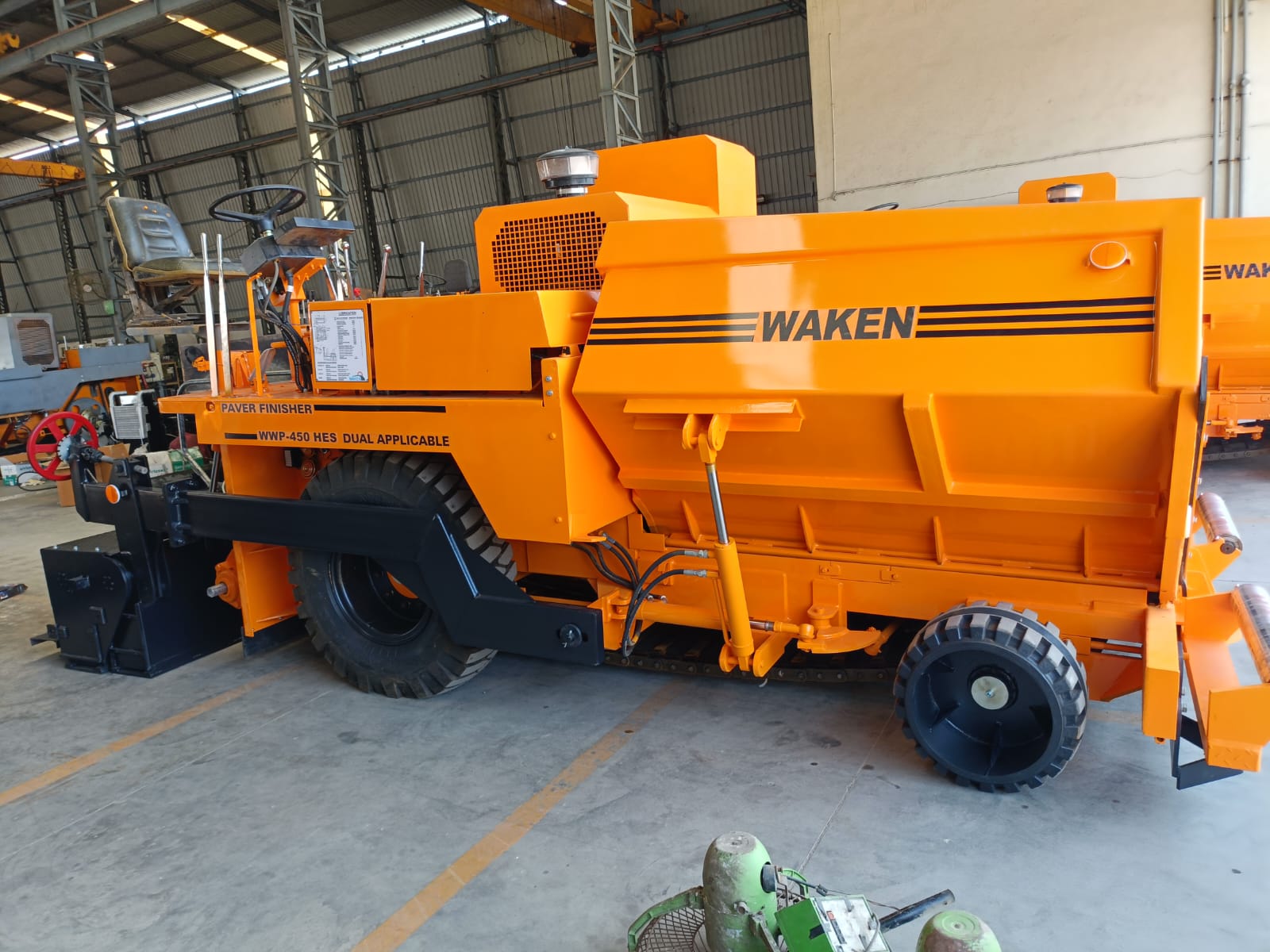
Efficient Wet Mix Paver Operation for WMM Laying
Understanding Wet Mix Paver Operation
Wet Mix Paver Operation involves a coordinated sequence of material delivery, spreading, and initial compaction to form a uniform and dense road base. Unlike bituminous pavers, WMPs are designed to handle the abrasive, non-flowing nature of Wet Mix Macadam (WMM) or Granular Sub-Base (GSB). Key operational areas include managing the paver's speed, controlling the material flow through the hopper and conveyors, and setting the screed for the exact layer thickness and road profile (camber/slope). Waken Multitech pavers feature intuitive controls that allow operators to maintain a steady, non-stop paving rhythm, which is critical for preventing material segregation and cold joints in the final WMM layer.
Step-by-Step WMM Laying Procedure
Successful Wet Mix Paver Operation begins with meticulous site setup. The operator must first verify the underlying layer is ready and then set the screed width and thickness according to the design specifications. As the dump truck docks, the paver ensures smooth transfer of the WMM into the hopper. The material is then moved by high-torque conveyors to the front of the screed. The operator controls the auger speed and paver speed to maintain a consistent "head of material" to avoid voids or overfilling. Continuous, steady motion is the mantra of efficient WMP operation, directly leading to a high-quality, homogeneous base course.
Critical Operational Checks
- **Material Flow Management:** Ensuring the conveyor and auger systems distribute WMM evenly across the screed width to prevent material segregation.
- **Paving Speed Synchronization:** Maintaining a consistent, low speed that matches the material delivery rate and the roller compaction cycle.
- **Screed Configuration:** Correctly adjusting the initial screed height and crown to achieve the specified depth and cross slope before compaction.
- **Reference Line/Grade Control:** Utilizing sensor or string line references to maintain longitudinal and transverse accuracy (grade and slope).
- **Hopper Management:** Keeping the hopper sufficiently filled (but not overflowing) to ensure a steady supply to the conveyors, which prevents stop-start paving.
Best Practices for Paver Efficiency
- **Continuous Paving Runs:** Minimize or eliminate unnecessary stops to avoid creating transverse joints that can compromise the layer strength.
- **Smooth Truck Exchange:** Coordinating dump truck transfers quickly and safely to maintain the paver's forward momentum.
- **Monitoring Material:** Constantly observe the WMM in the hopper and around the augers for signs of segregation or insufficient moisture.
- **Clean Paver Operation:** Keeping the screed plates and material tunnels clean from buildup to ensure smooth flow and accurate laydown.
- **Regular Gauge Reading:** Checking oil pressure, temperature gauges, and other dashboard indicators to ensure the engine and hydraulic systems are running optimally.
Challenges in WMP Operation
- **Material Segregation:** Occurs if the speed is too high or the material head is too low, leading to weak spots after compaction.
- **Poor Joint Quality:** Happens when paving stops and restarts are poorly managed, resulting in visible and structurally weak transverse joints.
- **Inconsistent Layer Thickness:** Caused by variations in paving speed or inconsistent material supply, affecting subsequent compaction.
- **Hydraulic Overload:** Can occur if the WMM is too stiff or the paver attempts to push material too quickly, requiring careful speed and pressure management.
Results of ExperMaximized Pavement Uniformity: Consistent operation leads to a WMM layer with uniform density and thickness throughout the project length.
- Increased Machine Lifespan: Proper operation, including smooth starts and stops, reduces unnecessary strain on the paver's engine and drive components.
- Cost-Effective Material Use: Accurate thickness control prevents laying excessive material, optimizing the usage of expensive WMM.
- Faster Follow-Up Compaction: A uniformly laid base is easier and faster for rolling equipment to compact to the final required density.
Training and Support for WMP Operation
Waken Multitech prioritizes comprehensive operator training as part of our commitment to reliable equipment. Effective Wet Mix Paver Operation requires skilled personnel who understand the machine's capabilities and the nuances of WMM. Our training programs cover safe operating procedures, diagnostic checks, and optimization techniques for varying site conditions. By ensuring your team is expertly trained, we guarantee your Waken paver delivers the highest quality base course efficiently and safely on every project.
Checklist for Daily Operational Setup
- Conduct a pre-shift walk-around inspection, checking fluid levels (fuel, hydraulic oil, coolant) and tire/track condition.
- Clean any asphalt or debris buildup from the screed bottom, augers, and conveyor slats before starting.
- Calibrate the grade sensors or confirm the string line setup is correct for the day's paving run.
- Ensure all safety guards and emergency stops are functional and accessible to the operator.
- Brief the dump truck drivers and roller operators on the target paving speed and communication signals for coordinated work.
FAQs – Wet Mix Paver Operation
Contact Details
Talk to our specialists today for tailored solutions and fast assistance.